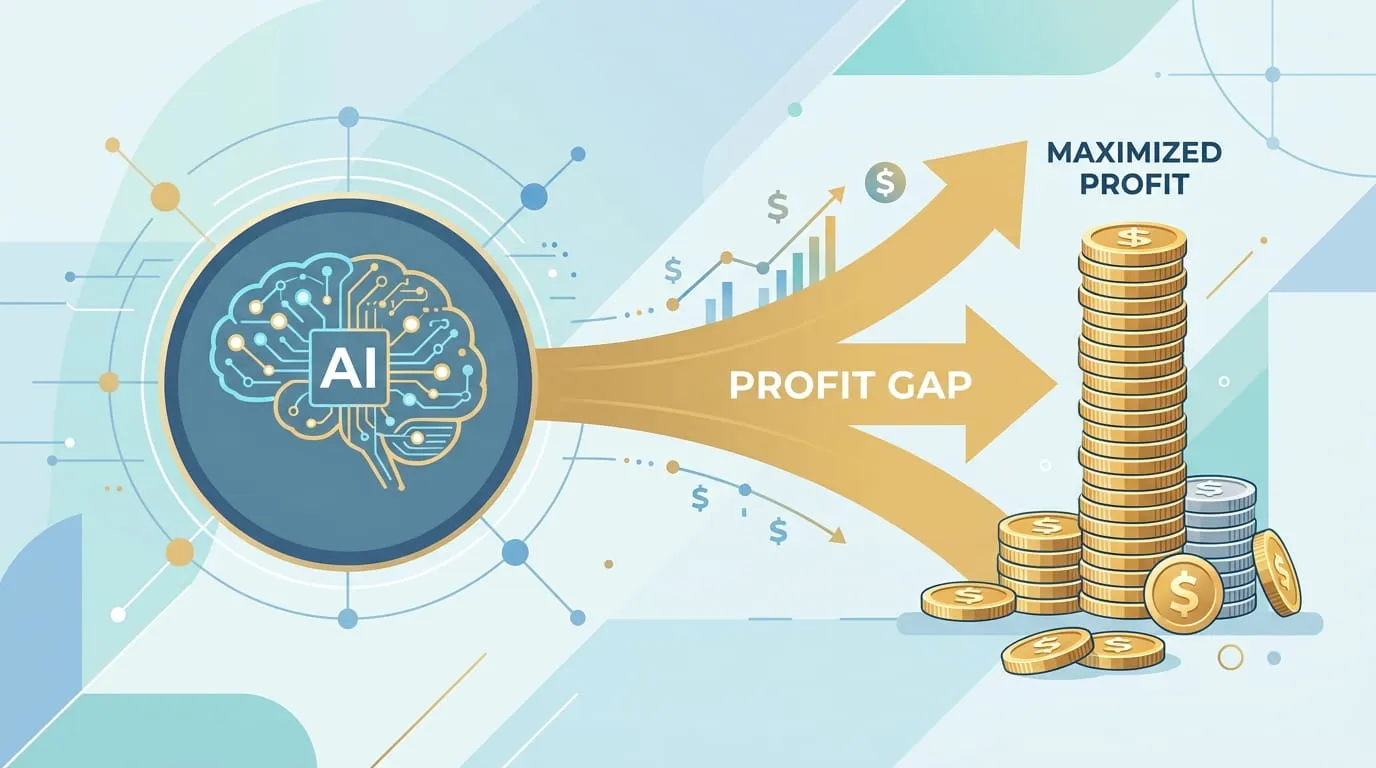
AI arbitrage is the practice of using artificial intelligence to close the gap between what something costs to produce and what a buyer is willing to pay for it. The gap can show up in a trading account, a service business, or a resale listing. In every case, AI does the heavy lifting that used to require a person, and the person who owns the workflow keeps the difference.
The term gets used loosely online, sometimes to describe a legitimate business model and sometimes to sell a course or a bot that promises passive income. This guide separates the two. It covers what AI arbitrage actually means, the main forms it takes, how the process works in practice, and the risks that most explanations skip over.
What AI Arbitrage Actually Means
Arbitrage, in its original financial sense, means buying an asset in one market and selling it in another where the price is higher, capturing the difference with little or no risk. AI arbitrage keeps that basic structure but widens what counts as the asset. It is no longer only stocks, currencies, or commodities. It can be a piece of content, a customer support reply, a logo design, or a discounted product listing.
What makes it “AI” arbitrage specifically is the production method. A human doing the same work would need hours to research, draft, or monitor a market. An AI system can do a comparable version of that work in seconds or minutes, at a fraction of the cost. The person running the arbitrage prices their output based on what the market has historically paid for that kind of work, not based on the low cost of the AI tool that produced it. The margin between the two is the arbitrage.
This applies whether someone is trading currency pairs with an automated model or selling AI-written product descriptions to small businesses. The mechanism is identical even though the industries look nothing alike.
How AI Arbitrage Differs From Traditional Arbitrage
Traditional arbitrage depends on information or speed advantages that are hard to get and quick to disappear. A trader who spots a pricing gap between two exchanges has to act before other traders close it. That kind of arbitrage has always required capital, infrastructure, and split-second execution.
AI arbitrage changes three things about that equation.
Speed and scale increase sharply. An AI system can scan thousands of data points, product listings, or client requests at once, something no individual could do manually.
The barrier to entry drops. Where financial arbitrage once required trading infrastructure and significant capital, service-based AI arbitrage can start with a laptop and a subscription to one or two AI tools.
The competitive advantage compounds differently. In classic arbitrage, the gap closes as more traders notice it. In AI arbitrage, the person who builds better workflows, better quality control, and better client relationships keeps an edge even after the raw cost advantage becomes common knowledge.
That last point matters because it explains why some AI arbitrage businesses last years while others collapse within months.
The Three Main Types of AI Arbitrage
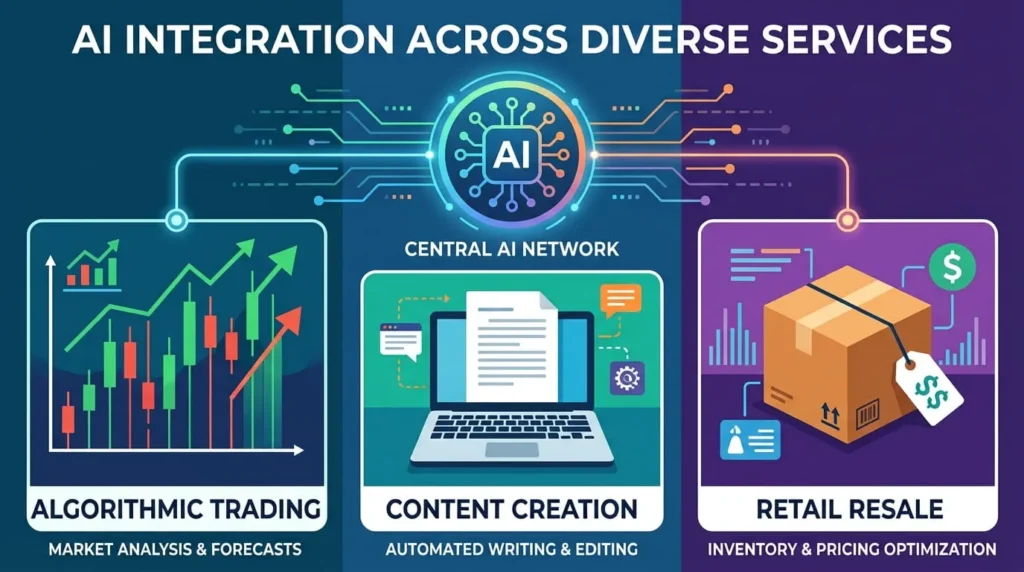
Most real-world examples fall into one of three categories. They share a mechanism but differ completely in risk, capital needed, and skill required.
Trading and Financial Arbitrage
This is the closest to arbitrage in its original sense. AI models scan crypto exchanges, forex pairs, or stock markets for price discrepancies and execute trades automatically, often within milliseconds. Strategies include cross-exchange arbitrage, where the same asset is priced differently on two platforms, and statistical arbitrage, where an algorithm bets on prices reverting to a historical relationship.
This category requires trading capital, an understanding of market risk, and comfort with the fact that algorithms can lose money as fast as they make it. Execution speed and slippage matter enormously here, and retail traders are competing against institutional systems with far more resources.
Service Arbitrage for Agencies and Freelancers
This is the most common form people mean when they say “AI arbitrage” as a business idea. A freelancer or small agency uses AI tools to produce work such as SEO content, ad copy, video editing, virtual assistant tasks, or customer support, then sells it at prices set by what the market has traditionally paid for that service.
A writer who used to spend four hours on a blog post might now spend forty minutes with AI assistance and editing, while still charging close to what a four-hour job was worth. The margin comes from time saved, not from underpaying anyone. Quality control is the part most beginners underestimate. Clients pay for a finished, reliable outcome, not for raw AI output.
Retail and E-Commerce Arbitrage
This version applies AI to a much older business: buying products cheaply and reselling them for a profit. AI tools scan marketplaces for underpriced listings, track demand trends, and flag products with a wide margin between sourcing cost and resale price. A person might use this to find discounted inventory to flip on a larger marketplace, or to time purchases around demand spikes.
AI here mainly replaces the manual scanning and trend research a reseller used to do by hand. The core retail skills, sourcing, pricing, and logistics, still apply.
How AI Arbitrage Works Step by Step
The mechanics look different depending on the category, but most AI arbitrage workflows follow a similar sequence.
First, a person picks a market with a known, stable price benchmark, whether that is a trading pair, a service category buyers already understand the cost of, or a product niche with predictable demand. Second, they set up an AI system, a trading bot, a content or automation tool, or a sourcing tracker, to handle the bulk of the repetitive work. Third, they add a layer of human oversight, checking trade parameters, editing AI output, or verifying supplier reliability, since unreviewed automation is where most losses happen. Fourth, they price the output based on market value rather than production cost, which is where the actual margin comes from. Finally, they monitor results and adjust, because arbitrage gaps shrink as more people and more AI systems enter the same market.

The step most guides leave out is the second-to-last one. Pricing based on cost instead of market value is the single most common reason new arbitrage attempts fail to turn a real profit.
Is AI Arbitrage Legal
Service and retail forms of AI arbitrage are legal in virtually every jurisdiction, provided the person is transparent about what they are selling and does not misrepresent the work as fully human-made when a client specifically requires that. Selling AI-assisted content, support, or design work is no different legally from selling any other freelance service.
Trading-based AI arbitrage sits in a more regulated space. Algorithmic trading is legal, but regulators actively monitor it for manipulation, and certain high-frequency strategies are restricted on specific exchanges. Anyone trading with an automated system should understand the rules of the specific platform and asset class they are using, since requirements vary by exchange and by asset.
Be cautious of any platform that markets itself as an “AI arbitrage” investment product promising guaranteed or passive returns. Legitimate trading carries real risk, and guaranteed-return language is a common warning sign of a scheme rather than a genuine trading strategy.
Common Risks and Why the Opportunity Shrinks Over Time
Every form of AI arbitrage faces the same underlying pressure. As more people adopt the same AI tools, the cost advantage that created the margin becomes normal rather than exceptional. Clients eventually notice that AI-assisted work is common and start expecting lower prices for it. Trading gaps close faster as more bots compete for the same inefficiency.
The businesses that keep their margin longest usually add something AI cannot easily replicate: a specific niche, a trusted client relationship, or a quality standard that raw automation does not reach on its own. Treating AI as the entire business, rather than as a production tool inside a real business, is the most common reason arbitrage income disappears within a year.
How to Get Started With AI Arbitrage
Anyone considering this seriously should start narrow. Pick one service, one trading strategy, or one product niche rather than trying several at once. Learn the market’s existing price expectations before touching a single AI tool, since pricing against the wrong benchmark undercuts the entire model. Choose one or two AI tools that can handle most of the production work, and spend the saved time on quality control instead of taking on more volume immediately. Track margins honestly, including subscription costs, platform fees, and the time spent editing or supervising, because a margin that looks good on paper can disappear once real costs are counted.
Is AI Arbitrage Worth It
For people willing to treat it as an actual business rather than a shortcut, AI arbitrage can produce a real and durable margin, especially in service-based models where quality control and client trust are hard for competitors to copy quickly. For people expecting a passive, guaranteed income stream with no oversight, the model tends to disappoint, particularly in trading, where losses are just as automated as gains.

The opportunity is genuine. It rewards the same things that have always separated a sustainable business from a short-lived trend: a clear niche, honest pricing, and consistent quality behind whatever tool is doing the production work.