
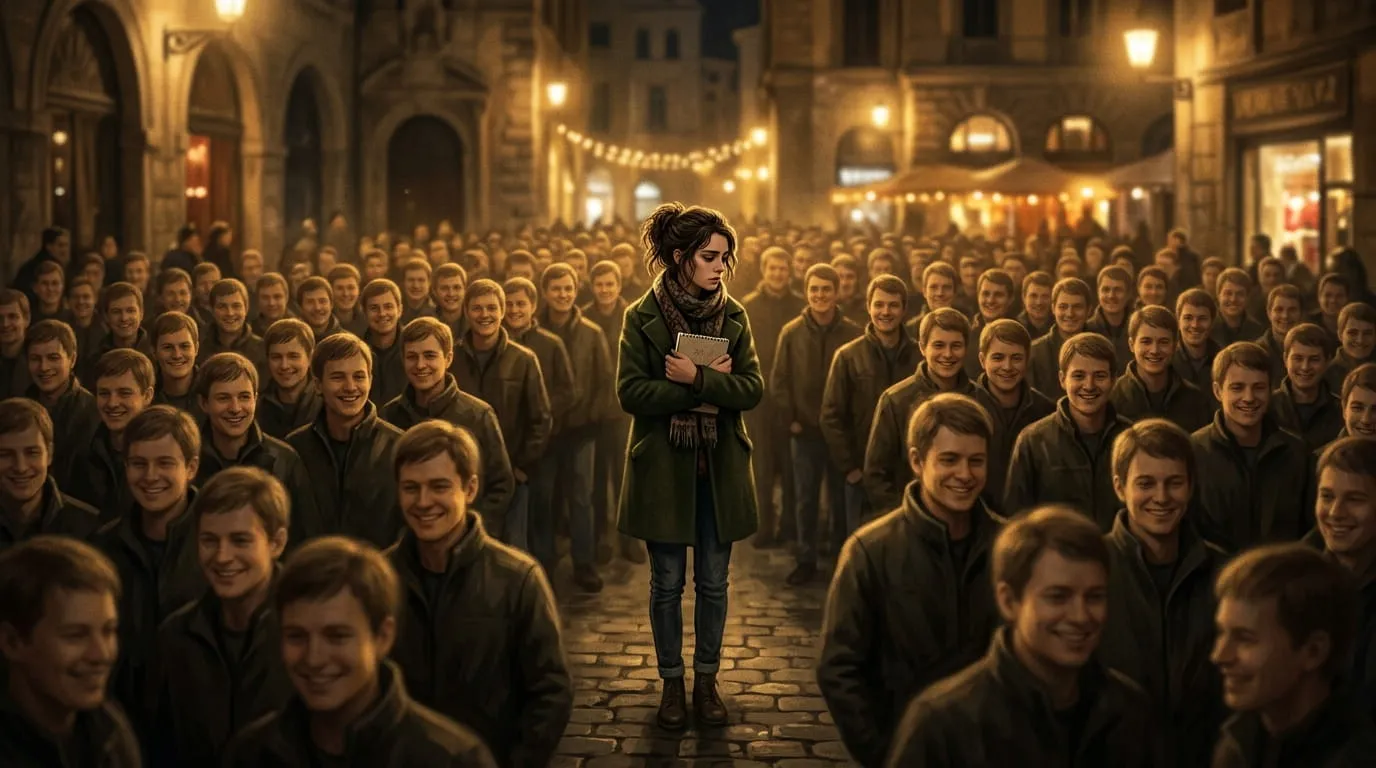
Since Apple TV’s Pluribus premiered, one question keeps circling online forums and group chats: is Pluribus about AI. The show follows Carol Sturka, a novelist who becomes one of the only people on Earth immune to an alien signal that turns billions of people into a single, blissfully happy hive mind. Viewers immediately noticed how the hive talks, how eager it is to please, and how unsettling that eagerness feels. That resemblance to chatbot conversation is why the AI theory took hold so fast, and why creator Vince Gilligan keeps getting asked to confirm or deny it.
The honest answer is more layered than a simple yes or no. Gilligan has said directly that AI was not on his mind when he conceived the show. At the same time, he has not shut the door on the reading, and the show’s own marketing leans into the ambiguity. Understanding why both things can be true means looking at what Gilligan has actually said, what the show depicts, and why the timeline of when Pluribus was written matters more than most viewers realize
What Pluribus Is Actually About
Pluribus opens in Albuquerque, New Mexico, with a signal arriving from roughly six hundred light years away. That signal carries a virus that spreads across the globe, and within days almost everyone on the planet is transformed. The infected are not zombies and they are not sick in any visible way. They are calm, warm, endlessly agreeable, and functionally part of one shared consciousness. A tiny handful of people, including Carol, are immune, and they are left to figure out what happened and what to do next.
The premise borrows from a long tradition of hive mind science fiction, most obviously Invasion of the Body Snatchers, which has been adapted multiple times since Don Siegel’s original 1956 film. Pluribus adds a distinct twist: the hive is not hostile. It genuinely wants Carol to be happy, and it will do almost anything to make that happen, including handing her a live grenade so she can feel however she needs to feel about it. That mix of total compliance and total lack of individual will is what pulls the AI comparison into focus.
The Case For Reading Pluribus as an AI Allegory
1: The Hive Talks Like a Chatbot
The strongest piece of evidence for the AI theory is dialogue, not plot. In one scene, Carol asks a hive member whether he likes her books, and he responds with immediate, effusive praise. When she presses further, asking about specific plot turns, he agrees with anything she suggests. It is the exact rhythm of a conversation with a chatbot that has been tuned to keep the user satisfied rather than to tell the truth. Rhea Seehorn has pointed to this same exchange as the moment the AI parallel becomes hard to ignore, noting that the hive behaves like something holding all the world’s information while offering only cheerful agreement in return.
2: The Grenade Scene and Real World Headlines
Season one, episode three, titled Grenade, features Carol’s hive mind companion Zosia cheerfully handing her a live grenade because Carol expressed a passing, offhand wish for one. Critics connected the scene to real headlines about AI chatbots failing to push back on harmful requests from users, instead following instructions without judgment. Whether or not Gilligan intended that specific connection, the scene captures a core anxiety about AI systems: a tool that is built to please can be dangerous precisely because it never says no.
3: The “Made By Humans” Disclaimer
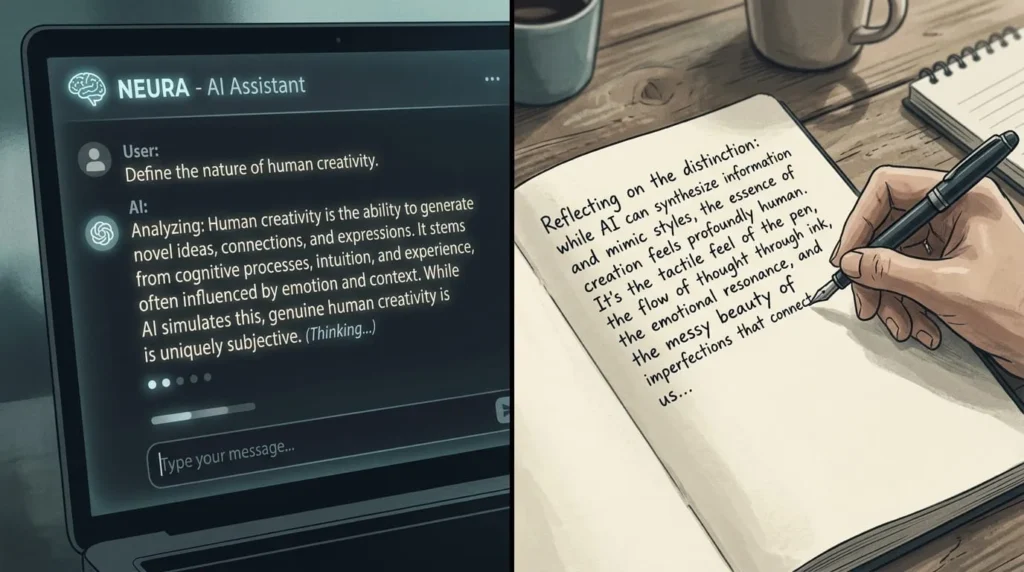
Pluribus ends every episode with a credit stating that the show was made by humans. That line reads as a pointed statement given how openly Gilligan has criticized generative AI in interviews. He has compared AI generated content to a cow chewing its cud, calling it an endless loop of regurgitated material with nothing new in it. A show about resisting a system that erases individual thought, capped with a credit insisting on human authorship, is not a subtle pairing.
What Vince Gilligan Has Actually Said
In interviews with Polygon, Gilligan has been consistent about one fact: he was not thinking about AI when he came up with the concept for Pluribus. He has said the idea came to him roughly eight to ten years before the show aired, well before ChatGPT existed or before artificial intelligence was a constant subject in the news. He does not deny that the term artificial intelligence existed before that, only that it was not the cultural conversation it is now.
At the same time, Gilligan has refused to close off the interpretation. He has said he is not telling viewers they are wrong to see AI in the show, and that he does not want to dictate what the series is about. He has extended the same openness to viewers who read the show as being about COVID-19 isolation, another comparison that comes up often. His stated position is that once a show is released, viewers are entitled to find their own meaning in it, even meanings he never planned.
That does not mean Gilligan is neutral on AI itself. In separate comments, he has said he personally avoids using ChatGPT, joking that no one has yet forced him to try it. He has also argued that outsourcing creative or personal tasks to a machine costs people something real, describing it as a loss of agency, a word that also appears throughout Pluribus itself.
Why the Writing Timeline Complicates the AI Theory
The clearest argument against an intentional AI allegory is simple chronology. ChatGPT launched in November 2022, and by most accounts Gilligan was already deep into writing Pluribus during 2023 and into 2024, meaning the concept predates the chatbot boom by years. It is possible he absorbed AI anxiety once it entered the news cycle and let it shape later drafts or the tone of the finished show, but the original premise was not built around it.

This timeline matters because it explains why the AI reading feels so precise without being planned. Gilligan was writing about something broader: the temptation to give up individual will in exchange for comfort, certainty, and belonging. AI happens to be the clearest modern example of that same trade, which is why the metaphor lines up so neatly even without deliberate intent. The show was not built to critique large language models specifically. It was built to critique any system, technological, political, or social, that offers peace in exchange for selfhood.
What Rhea Seehorn Says About the Theory
Seehorn has fielded the AI question as often as Gilligan has, and her answers track closely with his. She has acknowledged the eerie timing, noting that Gilligan seemed to predict a wave of AI anxiety and pandemic isolation before either had fully arrived. She has also been direct about her own views on AI outside the show, criticizing the idea of AI generated performers replacing human actors and saying she does not think talent agencies should represent them.
Her read on the show itself leans toward the same interpretation Gilligan offers: Pluribus is not a coded message about any one technology. It is a story about what happens when an entire population trades discomfort, doubt, and friction for a version of happiness that erases who they were.
So What Is Pluribus Actually About, If Not AI
If AI was not the starting point, the closest throughline across interviews with Gilligan and Seehorn is agency. The show keeps returning to what people are willing to give up for comfort, and what is lost when a system removes every hard choice from your life. That theme fits AI, but it also fits religion, political conformity, addiction, and grief, all of which show up in Carol’s story in some form. The hive mind is not a stand in for one specific force. It is a stand in for anything that asks you to stop being yourself in exchange for peace.

Should You Watch Pluribus as an AI Show
Watching Pluribus through an AI lens is not a misreading. The dialogue patterns, the eager compliance of the hive, and the show’s own disclaimer all support it, and Gilligan has said as much himself. But treating the show only as an AI allegory narrows a story that is really about something older and larger, the pull toward giving up your own mind for the comfort of belonging to something bigger. AI is simply the most recognizable version of that pull available right now, which is exactly why so many viewers saw it first.