

Yes, Cain Walker is an AI music project, not a living country artist. Both Apple Music and AllMusic list the act as an AI music project credited to Dallas Little. The songs have a polished, mainstream country sound with a gravelly vocal delivery, and the project has landed on Billboard’s charts. Here is what is actually known about who is behind the name, how the music charted, and what separates it from a real touring artist.
Is Cain Walker AI, or a Real Country Singer?
Cain Walker looks like a typical rising country act at first glance. There is a name, an album cover, a catalog of songs, and a growing streaming audience. What is missing is a person. Apple Music’s artist page describes Cain Walker as an AI music project credited to Dallas Little, and AllMusic’s listing repeats that same credit. Billboard has gone a step further and tagged the act as a “virtual act” on its charts, which is the publication’s way of flagging that a project is AI generated rather than performed by a human artist.
The songs carry recurring themes of defiance, hard work, loyalty, and independence, all staples of mainstream country songwriting. That familiarity is part of why so many listeners assumed Cain Walker was a real person before the AI label spread.
Who Is Behind Cain Walker?
Dallas Little is the name attached to the project on every major platform that lists a credit. A United States trademark application for CAIN WALKER, filed on January 10, 2026, also names Dallas Little as the applicant, covering downloadable music files and sound recordings. That filing gives the project a documented legal owner, which is more transparency than most AI music accounts offer.
What the public record does not show is just as important. No verified interview has confirmed which AI voice or music generation tool produced the vocals, and no production credits list a specific software platform or workflow. Treat any claim about the exact tools behind Cain Walker as speculation unless it comes from Dallas Little directly. A large catalog of songs is not proof of a particular creative process, so it is worth reading chart numbers and streaming totals as facts on their own rather than evidence of how the music was made.
This gap between a documented legal owner and an undocumented creative process is common among AI music projects right now. A trademark filing protects a name and a revenue stream, but it does not require the applicant to disclose the underlying technology, and most AI acts have little incentive to explain their production methods while the songs are still performing well commercially.
The Songs and Albums Cain Walker Has Released
The project’s first album, Don’t Tread On Me, came out in 2025. It included the singles “Don’t Tread On Me” and “Ain’t My Problem,” both of which became the project’s breakout tracks. “I Don’t Care” followed as another charting single, and later releases “Freedom” and “The Wind and Rain” kept the catalog growing into early 2026.
Musically, the songs lean into a radio-ready country sound with a rough-edged, emotive vocal tone. The lyrics favor broad, relatable statements about independence and pushing back against outside pressure rather than specific personal storytelling, which is a common pattern in AI-generated songwriting built to appeal to a wide country audience.
How Cain Walker’s Music Reached the Charts
Cain Walker’s chart success came primarily through Billboard’s Country Digital Song Sales chart, where “Don’t Tread On Me” peaked at number three and “Ain’t My Problem” reached number nine. A later chart week saw Cain Walker tracks sitting in the third, ninth, and eleventh positions at once, alongside the AI project Breaking Rust in the top spot.
This is a detail worth understanding clearly. The Digital Song Sales chart measures paid downloads only, not radio airplay or streaming volume, which means it carries far less weight than Billboard’s Hot Country Songs chart and is easier to influence with a relatively small, concentrated push of purchases. Cain Walker has not appeared near the top of Hot Country Songs, the chart that actually reflects mainstream country radio and streaming reach. The project also picked up entries on the UK’s Official Charts, with songs including “Don’t Tread On Me,” “I Don’t Care,” “Freedom,” and “The Wind and Rain” registering modest download-driven positions there as well.

How Many People Actually Listen to Cain Walker?
Cain Walker’s Spotify monthly listener count has moved quite a bit since the project first drew attention, climbing past 800,000 at its peak coverage in late 2025 before settling into the low hundreds of thousands more recently. That kind of swing is common for a project that likely benefits from coordinated listening and download activity rather than the slow, organic growth of a touring artist building a fan base over years.
Beyond streaming, the project runs an active YouTube channel and an Instagram account with several hundred thousand followers, both branded around the tagline “Country Soul & Blues.” There is no touring history, no live performance footage, and no press interview with a person claiming to be Cain Walker, which is consistent with a virtual project rather than a working musician.
How to Tell If a Song Is AI Generated Like Cain Walker
Spotting AI country music is genuinely difficult by ear alone. Independent testing has found that only a small fraction of adults, in the range of 3 percent, can reliably tell AI-generated music apart from human-recorded tracks in a blind listening test. A few practical signals still help.
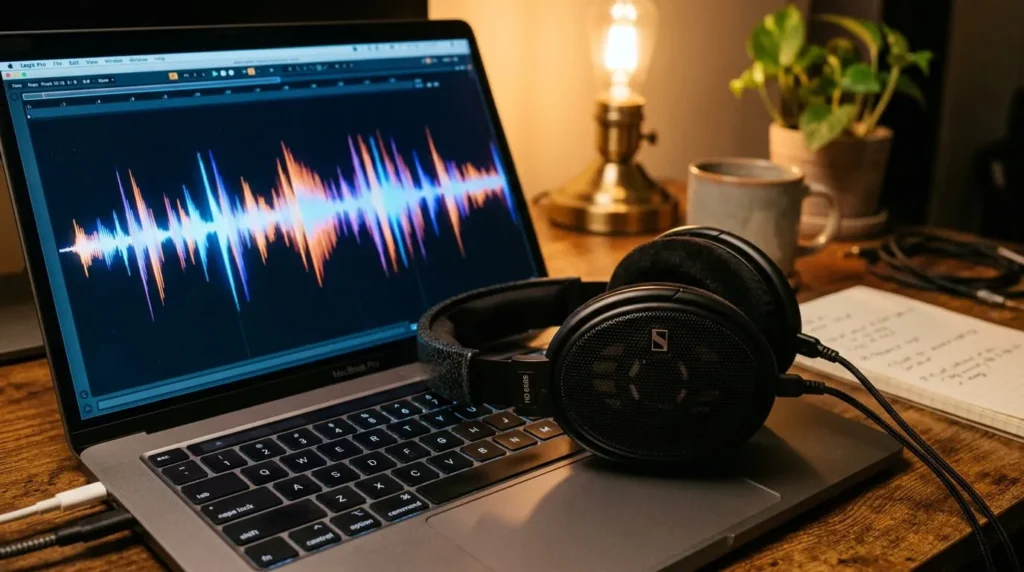
Look for a vocal performance that sounds technically flawless but emotionally flat, without the small imperfections, breath sounds, or phrasing variations a human singer naturally produces across a full song. Check whether the artist has any verified public appearances, interviews, or tour dates, since AI projects almost never do. Look at the lyrics themselves, since AI-written country songs tend to lean on broad, familiar phrases rather than specific personal detail. Finally, check the platform’s own labeling, since Billboard and similar outlets have started tagging known AI projects as virtual acts directly on their charts.
Why the Country Music Industry Is Pushing Back
Cain Walker’s chart appearances landed in the middle of a broader fight between AI music projects and the songwriters, producers, and musicians who make a living in country music. Nashville Songwriters Association International has publicly described AI’s rise as a genuine threat to working songwriters, and industry commentators have argued that AI tracks put real artists at a financial disadvantage when they can chart without any of the costs or risks of a human career.
Tennessee responded to these concerns before Cain Walker even appeared, becoming the first state to pass a law protecting performers and songwriters from unauthorized AI recreations of their voice and likeness. That law does not target Cain Walker specifically, since the project has not been accused of copying a real singer’s voice, but it shows how seriously the industry and lawmakers are treating AI music as a structural issue rather than a passing novelty.
Is It Ethical or Legal to Stream Cain Walker’s Music?
There is nothing illegal about streaming or purchasing Cain Walker’s songs, and no public evidence has tied the project to stolen vocals or unauthorized use of a real singer’s voice. The more open question is one of disclosure and fairness rather than legality. Billboard’s decision to label the act a virtual artist on its charts is one attempt at giving listeners that context, though not every platform applies the same labeling.
Whether a fan sees that as a problem tends to come down to personal values. Some listeners have said openly that they enjoy the songs regardless of how they were made, while others avoid AI acts specifically because streaming and purchase dollars do not support a working musician, songwriter, or backing band. Either position is reasonable, and the choice largely comes down to what a listener wants their streaming activity to support.
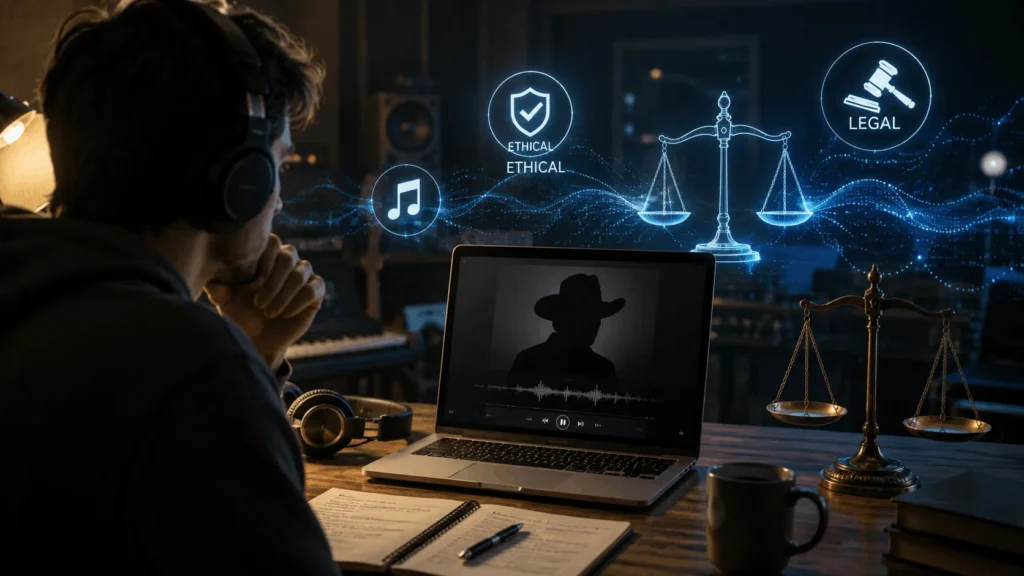
It is also worth separating Cain Walker from cases that do raise clear legal problems. Projects that clone a specific, identifiable singer’s voice without permission run into right-of-publicity and, increasingly, state-level deepfake laws. Cain Walker is not built around impersonating a known artist, which puts it in a different, more legally settled category than that kind of voice-cloning controversy, even though both fall under the same broad umbrella of AI-generated music.
What’s Next for Cain Walker
New singles kept appearing into early 2026, and the project has continued to register chart activity on both Billboard’s Digital Song Sales chart and the UK’s Official Charts. That suggests Cain Walker is being actively maintained rather than left as a one-off viral moment, though nothing in the public record indicates whether that pace will continue.
What happens next likely depends less on the music itself and more on how streaming platforms, chart organizations, and state legislatures decide to handle AI-generated acts going forward. For now, Cain Walker remains one of the clearest examples of an AI country project succeeding commercially while its creator stays almost entirely out of public view.