
Yes, Expedition 33 used generative AI during part of its development, though only for temporary placeholder textures that were never meant to ship. Sandfall Interactive has confirmed this more than once since mid-2025, and the admission cost the game two major awards in December. Here is what was actually used, when the story broke, and why it resurfaced months after most players had finished the RPG.
The Short Answer: Yes, But Only for Placeholder Art
When a small team is racing to hit a deadline, blank walls and empty signage slow everyone down. According to Sandfall, a few artists briefly used generative AI tools back in 2022, when the technology was still new, to fill in placeholder textures such as posters and background text. These were never intended to be the final assets. The plan was always to replace them with hand-made art before launch.
That plan mostly worked. What did not work was quality assurance catching every instance before the game shipped in April 2025. A handful of AI-generated textures slipped through, and that oversight is the entire reason this became a story at all. To be clear, this does not extend to the story, characters, combat design, or dialogue, all of which came from Sandfall’s human team.
How the Controversy Came to Light
The July 2025 Interview That Started It
Producer François Meurisse first addressed the topic in a July 2025 interview with the Spanish outlet El País, where he said the studio used “some AI, but not much.” At the time, the comment barely registered. It was buried in a foreign-language interview months after launch, and nobody connected it to anything visible in the actual game.
Players Spot Odd Textures at Launch
The visible evidence had actually surfaced earlier. Around launch in April, players noticed strange, garbled text on wall posters and background signage in one area of the game. Screenshots circulated on social media, with fans debating whether the odd lettering was a stylistic choice or something generated by a machine. Sandfall patched the assets out within five days, replacing them with the correct, hand-crafted textures that had always been intended for release. For most of 2025, that seemed to be the end of it.
What the AI Was Actually Used For
To be precise about scope, the generative AI use was limited to visual placeholders during pre-production, not core art, writing, character design, or gameplay systems. Sandfall has stated that everything in the released version of Expedition 33, aside from the brief window of leftover textures, was made by human artists, writers, and designers. The tool was used the way a studio might use stock photos or programmer art: as a temporary stand-in while the real asset was still being built.
This distinction matters because it separates Expedition 33’s situation from studios that lean on AI for finished, customer-facing content. Sandfall’s own explanation is that the technology felt useful for a few months in 2022, then the team decided it produced results they did not like and stopped using it entirely.
The Indie Game Awards Disqualification
What Sandfall Told the Committee
The story reignited in December 2025, right around The Game Awards, where Expedition 33 won Game of the Year and set a record for most wins in the show’s history. Days later, the Indie Game Awards held its own ceremony and initially handed Expedition 33 both Debut Game and Game of the Year. Then everything changed.
According to the Indie Game Awards, a Sandfall representative had assured the committee during the submission process that no generative AI was used anywhere in the game’s development. When the resurfaced July interview and the earlier texture screenshots recirculated online the same night as the ceremony, organizers determined that assurance was inaccurate. Because the Indie Game Awards maintains a strict rule against any generative AI use at any stage of development for nominated titles, Expedition 33 was disqualified on the spot.
Who Won Instead
With Expedition 33 removed from contention, the Indie Game of the Year award moved to runner-up Blue Prince, and Debut Game went to Sorry We’re Closed. The Indie Game Awards published a statement standing by the decision, noting that while Expedition 33 is an excellent game, the undisclosed AI use during development directly violated its published eligibility rules.

Sandfall’s Response to the Backlash
Sandfall’s leadership did not try to minimize what happened. Studio head Guillaume Broche later explained that the team experimented with AI when it was still an unfamiliar tool, tried it briefly, and moved away from it because the results “felt wrong.” He committed to an all-human approach for future projects, stating that everything from Sandfall going forward will be made by people, not generative tools.
That statement has not fully settled the debate among fans. Some players consider the placeholder-only explanation reasonable, since nothing AI-generated exists in the version of the game they actually play. Others argue that disclosure should have happened immediately rather than emerging piecemeal across a Spanish interview, patch notes, and a resurfaced screenshot months later.
Does This Affect the Version You’re Playing Right Now
No. Every AI-generated texture identified by players and by Sandfall itself was removed within the first week after launch. If you bought or downloaded Expedition 33 any time after that early patch, generative AI never touched anything visible in your copy of the game. The controversy is entirely about development history and awards eligibility, not about content currently shipping to players.
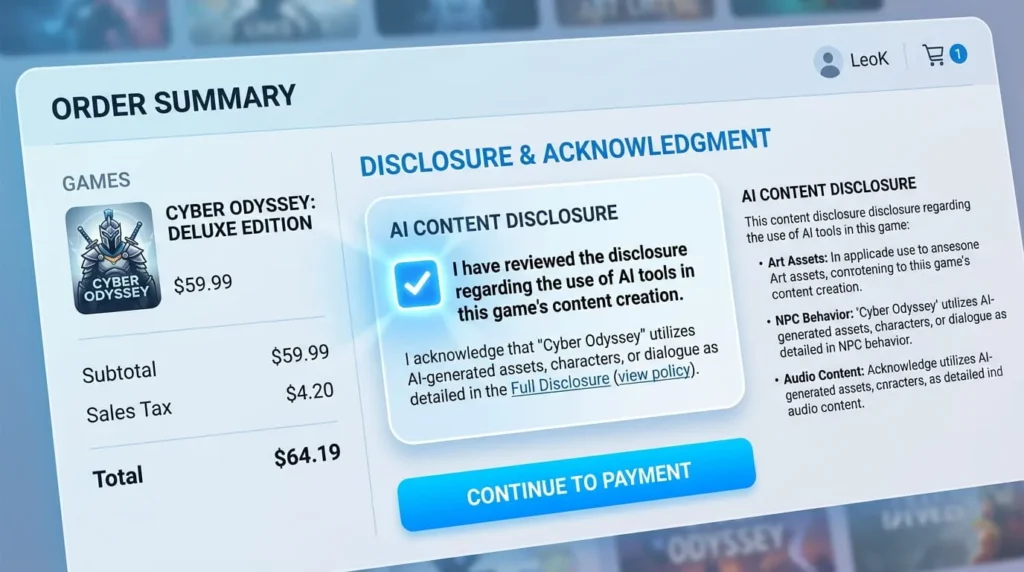
That said, the game still did not carry an AI-use disclosure on its storefront page, which some platforms require regardless of whether the AI content made it into the final build. That gap is part of why the story generated so much frustration once it resurfaced.
How This Compares to Other Studios Using AI
Expedition 33 is far from the only high-profile release caught up in this conversation. Larian Studios, the team behind Baldur’s Gate 3, has separately acknowledged using AI tools for internal presentations, early concept art, and placeholder writing during development of its next project. In both cases, the studios describe AI as a workflow shortcut for unfinished, internal materials rather than a replacement for the final creative work players experience.
The difference in outcome mostly comes down to disclosure and to what each awards body requires. Most award shows have not penalized brief, internal AI use the way the Indie Game Awards did, since its rules are unusually strict and apply to any generative AI use at any stage, not just finished content.
An Ironic Twist: AI Later Copied Expedition 33’s Own Art
Months after the awards controversy, Expedition 33 became part of a different AI story, this time as the target rather than the user. A major tech company demoed an AI world-generation tool that let users type a prompt and receive a playable 3D scene. When a tester typed a simple prompt describing a woman in a glowing cave, the tool generated a character and environment that closely resembled Expedition 33’s protagonist Maelle and its Flying Waters level, at noticeably lower visual quality.
Players immediately pointed out the resemblance, raising questions about whether the AI model had been trained on footage or assets from the game without permission. The irony was hard to miss: a studio that faced awards consequences for briefly using AI internally was now watching its own original art potentially get scraped and reproduced by someone else’s AI system.
What This Means for AI Use in Game Development
The Expedition 33 case has become something of a reference point for a much bigger, unresolved question: how much AI use is acceptable in a finished commercial game, and does the answer change if that use never reaches the final product. Right now there is no industry-wide consensus. Some organizations, like the Indie Game Awards, treat any generative AI use as disqualifying, regardless of whether players ever see the result. Storefronts like Steam require disclosure of AI content on a game’s page, but enforcement and definitions still vary from case to case.
For players, the practical takeaway is straightforward. The Expedition 33 you can buy and play today contains no generative AI content, since the placeholder textures were removed within days of launch. The controversy that followed is really a story about disclosure, award eligibility rules, and how quickly old interviews can resurface once a game becomes famous enough for people to go looking.
Quick Answers to Common Follow-Up Questions
1: Did Expedition 33 Lose Its Game Awards Wins Too
No. The Game Awards has not rescinded any of Expedition 33’s nine wins, including Game of the Year. Only the Indie Game Awards, a smaller ceremony with its own strict anti-AI eligibility rule, revoked its honors. The two organizations operate independently and apply different standards.
2: Is Expedition 33 Still Worth Buying After This
Most players and critics say yes. The AI controversy concerns a small, temporary part of the development process rather than anything in the finished game you play today. Review scores and player reception have stayed largely positive, and the studio’s public commitment to human-made art going forward has satisfied a large share of the community, even if not everyone agrees the response came fast enough.
3: Will Sandfall Add an AI Disclosure to the Store Page
As of the most recent statements from the studio, no formal disclosure label has been added to the game’s storefront listing, even though some platforms require one when AI tools were used during development. Whether that changes depends on platform enforcement, which has been inconsistent across the industry.