

Short answer: no single chatbot query is killing a polar bear. But the claim behind the “AI is killing polar bears” trend is not pure nonsense either. It is a mix of a genuine environmental argument, stretched into a viral shorthand, wrapped in comedy. To understand what is actually true, you need to separate three different things that have gotten tangled together online: a meme, a real scientific concern about data center energy use, and the actual, well documented reasons polar bears are struggling.
Where the “AI Is Killing Polar Bears” Trend Started
In January 2026, a wave of videos on TikTok and Instagram Reels turned “AI is killing polar bears” into a full blown meme format. Some creators posted AI generated clips of polar bears holding signs that read things like “stop using AI,” played for laughs. Others reposted the phrase earnestly, arguing that every image generated or every chatbot prompt sent contributes to warming that melts Arctic sea ice.
One widely shared post used a compilation of struggling polar bears with a caption warning viewers that generative AI use directly harms the animals, and it picked up hundreds of thousands of views within days. From there, the trend split into two lanes: sincere environmental warnings, and parody content mocking those warnings with AI generated images of robots rescuing bears or seals holding signs asking AI to “help” them instead. Neither lane tells the full story on its own.
What Actually Threatens Polar Bears
Before getting into AI’s role, it helps to know what conservation groups actually list as the real dangers facing polar bears, since the meme skips most of this context.
1: Sea Ice Loss From Climate Change
Climate change is the single biggest threat to polar bear survival. Polar bears depend on sea ice to hunt seals, their primary food source, and to travel, rest, and in some regions den. As Arctic sea ice breaks up earlier in spring and reforms later in fall, bears spend longer stretches on land without food. In Hudson Bay, for every week the ice breaks up early, bears come ashore roughly 22 pounds lighter and in worse physical condition. Longer fasting periods mean lower reproduction rates and higher cub mortality, and in the most severely affected regions, this can lead to local population decline.
2: Pollution and Industrial Development
Because polar bears sit at the top of the Arctic food chain, they accumulate high levels of pollutants that build up through the animals they eat. Some of these persistent organic pollutants have been linked to lowered vitamin A levels, disrupted hormone function, and even abnormal reproductive development in a small percentage of sampled bears. Oil and gas exploration, shipping, and industrial activity in the Arctic add further pressure, both through habitat disruption and the risk of spills, which can poison a bear’s fur and skin on contact.
3: Human-Bear Conflict
As sea ice disappears, hungry bears increasingly wander into coastal towns and villages looking for food. This raises the risk of dangerous encounters for both people and bears, sometimes ending in injury or death on either side. This is a downstream effect of habitat loss, not a separate, unrelated problem.

Does AI Actually Contribute to the Climate Change Harming Polar Bears?
This is where the meme has a real foundation underneath it, even if the framing is exaggerated.
1: How Much Electricity AI Actually Uses
Training and running large AI models requires substantial computing power, and computing power requires electricity. Data centers worldwide, which include AI workloads alongside everything else digital, currently consume around 1.5 percent of global electricity. That is a meaningful and fast growing share, but it is a fraction of what other sectors, such as transportation, manufacturing, and heating, consume.
2: Where That Electricity Comes From Is the Real Variable
The climate impact of a single AI query depends almost entirely on how the electricity powering it was generated. If a data center runs on electricity from a coal or gas plant, the emissions tied to that computing directly add to the greenhouse gases warming the planet and melting sea ice. If it runs on wind, solar, hydro, or nuclear power, the climate cost is far lower. Right now, most new renewable energy capacity coming online is being used to meet rising overall electricity demand, including from AI, rather than replacing existing fossil fuel generation. Fossil fuels only get displaced at scale once renewable growth outpaces demand growth, and that threshold has not been reached yet.
3: Water Use for Cooling Is Real, but Not New
Data centers use water to cool servers, and AI has increased that demand as computing needs grow. This is not a new practice. Facilities have used water for cooling for decades, and in places with functioning environmental regulation, laws govern how much water can be withdrawn and at what temperature it can be returned to local ecosystems. The concern is less about water use existing at all, and more about whether regulation and enforcement keep pace with AI’s growing footprint.
So Is the Claim Exaggerated?
Yes, in the way it is usually presented online. No individual person typing a prompt into a chatbot is personally responsible for a specific polar bear’s death. Climate change is driven by the cumulative emissions of global energy production, transportation, agriculture, and industry built up over more than a century, not by any one technology or any one person’s habits. AI’s electricity demand is a genuine and growing contributor to that larger picture, worth taking seriously, but treating it as the reason polar bears are dying skips over decades of fossil fuel use that came long before generative AI existed.
The meme format itself, with cartoonish AI generated bears holding protest signs, was never meant to be taken as literal causation. It works as a way to make an abstract issue, data center emissions, feel immediate and personal, even if the mechanism it implies is oversimplified.
How AI Is Actually Helping Polar Bears
The same technology getting blamed in the meme is also being used directly in polar bear conservation, which rarely makes it into the viral version of this story.
Researchers use AI powered radar systems, sometimes called bear-dar, to detect approaching polar bears near Arctic communities and warn residents before a dangerous encounter happens. Computer vision models can identify individual bears from scars, fur patterns, and body shape captured in photos or video, which lets scientists track populations without the stress of physically tagging animals. AI is also used in sea ice forecasting tools that help predict when ice will break up or reform in a given region, giving researchers and Indigenous communities better data to plan around.
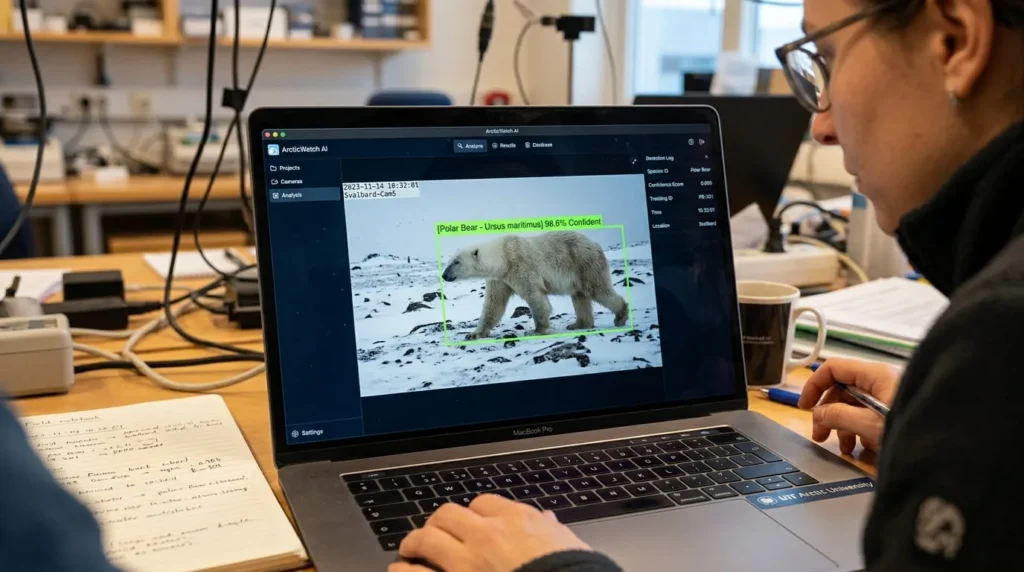
None of this cancels out AI’s energy footprint. But it does mean the relationship between AI and polar bears is not one directional. The same tools raising legitimate energy concerns are also giving conservation groups better ways to protect the animals on the ground.
What This Means if You Use AI Tools
If you are wondering whether to feel guilty every time you use a chatbot or image generator, the honest answer is that your individual usage is a rounding error compared to industrial emissions, transportation, and energy production at large. That does not mean AI’s environmental footprint does not matter. It means the leverage points that actually move the needle are different from personal guilt.

The decisions that matter most happen at a different level: which energy sources power the data centers running these models, whether governments enforce water and emissions regulations on those facilities, and whether renewable energy growth outpaces rising demand. Supporting climate policy, backing renewable energy expansion, and pushing companies toward transparency about their energy sourcing will do far more for polar bears than avoiding a chatbot.