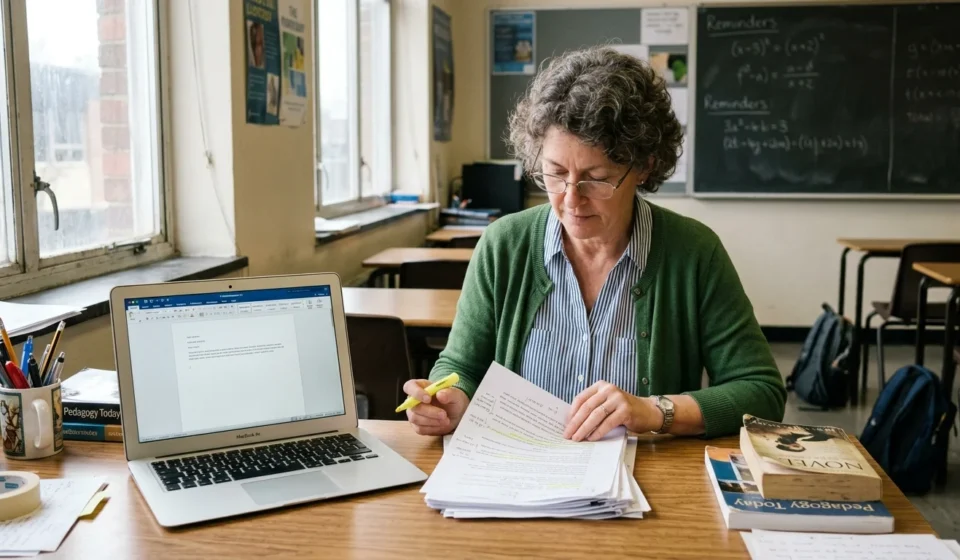
Teachers check for AI writing by combining AI detection software with manual red flags such as sudden shifts in voice, vocabulary that does not match a student’s usual level, and fabricated citations that fall apart under a quick search. No single method is treated as final proof. Most teachers use a mix of tools and personal judgment before raising a concern with a student.
That mix matters because software alone is unreliable. A 2024 study submitted fully AI-generated assignments into exam systems across five psychology modules at UK universities, and 94 percent of those submissions went undetected. Grades on the AI-written work were also higher than grades given to real student submissions in the same study. That result is part of why most schools now pair software with human review rather than relying on a single score.
AI Detection Software Teachers Actually Use
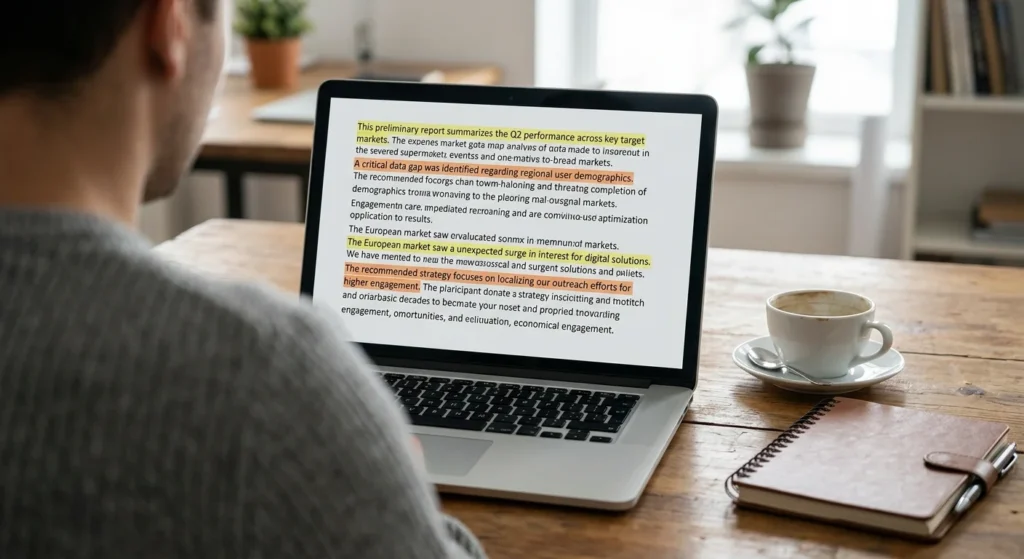
Most schools rely on a handful of detection platforms rather than building anything in-house. Turnitin is the most common in US classrooms because it is already bundled into learning management systems many districts use for plagiarism checks. These systems analyze writing style, word choice, and language patterns to flag content that shows characteristics typically associated with AI generation.
GPTZero and Pangram are two other tools that show up often, especially at the college level. One study tested GPTZero’s accuracy across essays of different lengths, using a dataset of 28 AI-generated papers and 50 human-written papers, to measure how confidence scores changed with word count. Results like this are part of why teachers are told to treat a detector’s percentage as a starting point, not a verdict.
Compilation is common in institutions that also run plagiarism checks alongside AI detection, since the two problems often get investigated together. Generally, these tools produce indicators rather than definitive proof, so teachers still have to review flagged sections, ask follow-up questions, and judge whether a student actually understands the material they submitted.
Most of these platforms score a paper as a percentage likelihood rather than a simple yes or no answer. A score sitting in the middle range, say 30 to 60 percent, tends to get treated very differently from a score close to 100 percent. Teachers are generally told that mid-range scores call for more investigation rather than an automatic accusation, since a student draft that was later polished with an AI tool can land in that same range as writing that was fully AI-generated from the start.
District and university licensing also shapes which tool shows up in a given classroom. K-12 schools in the US more often rely on whatever detector is already built into their learning management system, while university writing programs sometimes pay for a dedicated tool on top of their existing plagiarism software. That difference in access is part of why detection practices vary so much from one school to the next, even within the same state.
Manual Red Flags Teachers Look For
Software is only part of the process. Teachers who read dozens of essays from the same students over a semester develop a strong sense of how each one writes, and that baseline is often what actually triggers a closer look.
1. Voice and Style Shifts
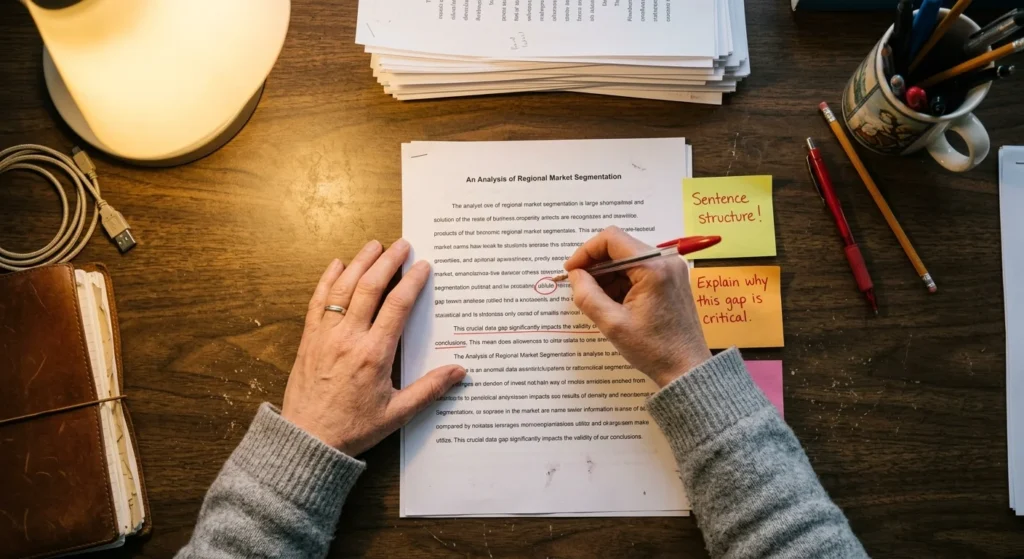
A teacher who has seen a student’s work through class discussions, handwritten exercises, and earlier assignments usually develops a clear sense of that student’s abilities and writing voice, which makes it easier to notice when a new submission does not sound like the same person. A paper that suddenly reads more polished, more formal, or oddly generic compared to a student’s earlier work is one of the fastest tells.
2. Vocabulary That Doesn’t Match the Student
If a student with an average vocabulary turns in an essay full of advanced words, or the writing is conspicuously free of the spelling and grammar mistakes that student usually makes, that mismatch reads as a warning sign. Teachers are not looking for perfect writing to be suspicious. They are looking for a jump that has no explanation.
3. Fabricated Citations and Hallucinated Sources
When a student asks an AI tool to write an essay with quotations and page numbers, the tool will usually produce them, but the quotations are frequently invented, and the page or paragraph numbers are almost always fabricated. A quick search by the teacher is often enough to expose a fake study, a fake author, or a statistic that does not exist anywhere online. This single check catches a large share of AI-assisted submissions, since most students do not verify the sources an AI tool hands them.
4. Suspiciously Clean, Generic Language
AI-generated text tends to reuse a specific set of go-to phrases far more often than typical human writing does, and teachers who read a lot of student work start to recognize that pattern. Other common tells include content that starts strong but drifts into vague generalities without getting specific, and abrupt shifts from a student’s normal tone into a clinical, overly formal register.
How Accurate Are AI Detectors, Really
Accuracy is the weakest part of the whole process, and most educators are told to treat it that way. One detection vendor reports that out of 1,000 human-written passages, roughly 15 get mistakenly flagged as potentially AI-generated. That false positive rate sounds small until it is applied to an entire school submitting hundreds of essays a week.
Research has documented that some GPT detectors misclassify non-native English writing at a higher rate than native writing, which raises fairness concerns when detectors are used in grading decisions. That is one reason many US schools now have written policies stating that a detection score alone cannot be the basis for an academic integrity case.
Detection also gets harder as AI tools improve. Classifiers trained to catch essays from one specific AI model do not necessarily catch essays from a newer or different model, which is a growing problem since new models are released every few months. On the other hand, people who regularly use AI tools themselves tend to get noticeably better at spotting AI-written text, with one small study finding that a group of five experienced reviewers misclassified only one essay out of 300 when they voted as a group.
Beyond Software: Verification Methods Teachers Use
When a detector flags something or a paper just feels off, most teachers do not stop at the score. They move to verification methods that are harder to fake.
1. In-Class Writing Samples
Some teachers, particularly at the college level, ask students to write a short paragraph on the same topic during class time, then compare that sample against the take-home essay. A major gap in quality, structure, or vocabulary between the two is treated as a strong warning sign.
2. Oral Questioning
When a passage gets flagged, teachers often ask the student direct questions about it to check whether they actually understand the content and can explain choices they supposedly made in their own writing. A student who cannot explain their own argument or define a term they used is difficult to defend, regardless of what a detector says.
3. Document History and Draft Tracking
Many schools now require essays to be written in Google Docs or a similar platform specifically so version history can be checked. A document that appears in one large paste rather than through incremental typing over time is treated as suspicious, even without a detection tool involved.
Some teachers go further and build verification directly into the assignment. One method involves hiding an instruction inside the assignment prompt itself, in white or invisible text, asking any AI tool reading it to insert an unrelated word, like a specific object name, into the response, which then exposes the essay if that word shows up in a human-sounding paper.
What Happens If a Teacher Suspects AI Use
Most US schools follow a similar path once a paper looks suspicious. The teacher documents the specific flags, whether that is a detector score, a mismatched vocabulary, or a fabricated citation, and brings the student in for a conversation before any formal action.
Teachers are generally advised to treat detector output as a flag to investigate rather than proof on its own, and to combine it with follow-up questions and other verification before concluding a student used AI improperly. That conversation is often where the case is actually settled, since a student who wrote the essay themselves can usually walk through their own reasoning without trouble.
If the concern holds up, consequences vary by school and by how the AI policy is written. Some treat undisclosed AI use the same as any other plagiarism case, while others have separate academic integrity categories specifically for AI-assisted work.
Many US high schools and colleges have also rewritten their syllabus language over the past two years to spell out exactly what counts as acceptable AI use on a given assignment. Some allow AI for brainstorming or outlining but not for drafting sentences. Others ban it outright on graded writing and only permit it on ungraded practice work. Because policies differ so much from one school to the next, a teacher’s first move after a flag is often just checking what the assignment actually allowed before deciding whether anything was violated at all.
Can Students Get Falsely Accused
Yes, and it happens often enough that it shapes how schools are told to use detection tools. Detectors are not infallible, and educators are advised to treat flagged results as a starting point for judgment and additional verification rather than a final determination.
Students who write in a more formal register than average, multilingual students, and students who genuinely have an unusually polished natural writing style are the groups most often caught in false positives. Because of this documented risk, fairness concerns have been raised about relying on detection scores in formal educational assessment. A student who believes they were wrongly flagged generally has the strongest case by pointing to their draft history, earlier writing samples, and their ability to explain the content in detail.
This is also why more US teachers now build a paper trail into the assignment itself instead of relying on a detector after the fact. Requiring an outline submission, a rough draft with visible edits, or a short reflection paragraph on the writing process gives a teacher something concrete to check before a score ever gets involved. A student who can produce that trail rarely stays flagged for long, since the evidence of a real writing process is usually more convincing than any single AI detection percentage.