
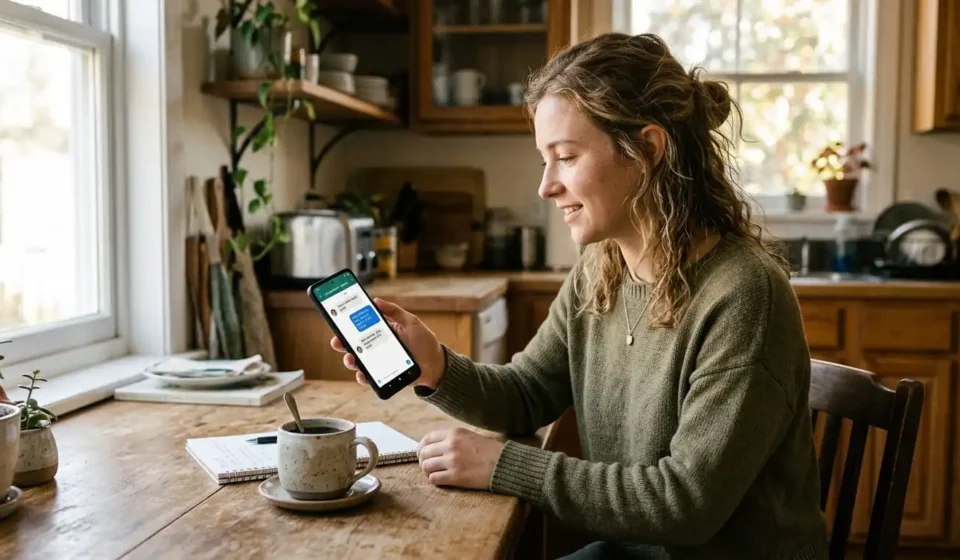
Yes, Babbel uses AI, but only in specific parts of the app. The core lessons are written by human linguists, while features like Babbel Speak, speech recognition, and personalized review scheduling run on artificial intelligence.
That mix surprises a lot of people who assume a modern language app must be AI end-to-end, or who worry the opposite: that AI has quietly replaced the human-built curriculum they signed up for. Neither is true. Below is where Babbel’s AI actually lives, how each piece works, and where the company has deliberately kept humans in charge.
The Short Answer
Babbel is not an AI-generated app. Every lesson, dialogue, and grammar note is written by a team of in-house linguists and language teachers, not a language model. AI shows up on top of that human foundation, in three main places: the Babbel Speak conversation partner, the speech recognition system that grades your pronunciation, and the review engine that decides which words to resurface and when.
That distinction matters for search intent here. If you are asking “does Babbel use AI” because you want a fully AI-driven conversation app, Babbel is a hybrid, not a pure play. If you are asking because you are worried Babbel replaced its teachers with a chatbot, it has not.
Where Babbel Actually Uses AI
1. Babbel Speak, the AI Conversation Partner
Babbel Speak is the clearest example of AI in the app. Babbel launched it in open beta on September 16, 2025, as a voice-led feature that lets learners hold real-time spoken conversations with an AI partner instead of just tapping through fill-in-the-blank exercises.
Babbel’s own product page describes the feature as expert-designed content brought to life by AI, and Principal Product Manager Franz Ardito has said the pedagogy comes from Babbel’s language experts while AI manages the natural conversational flow and the responses you get back. In practice, that means Babbel writes the scenario, the objective, and the guardrails, and AI handles the live back-and-forth within that scenario.
At launch, Babbel Speak covered English, Spanish, French, Italian, and German, with Spanish, German, French, and Italian available to try from a free account before subscribing.
2. AI-Enhanced Speech Recognition
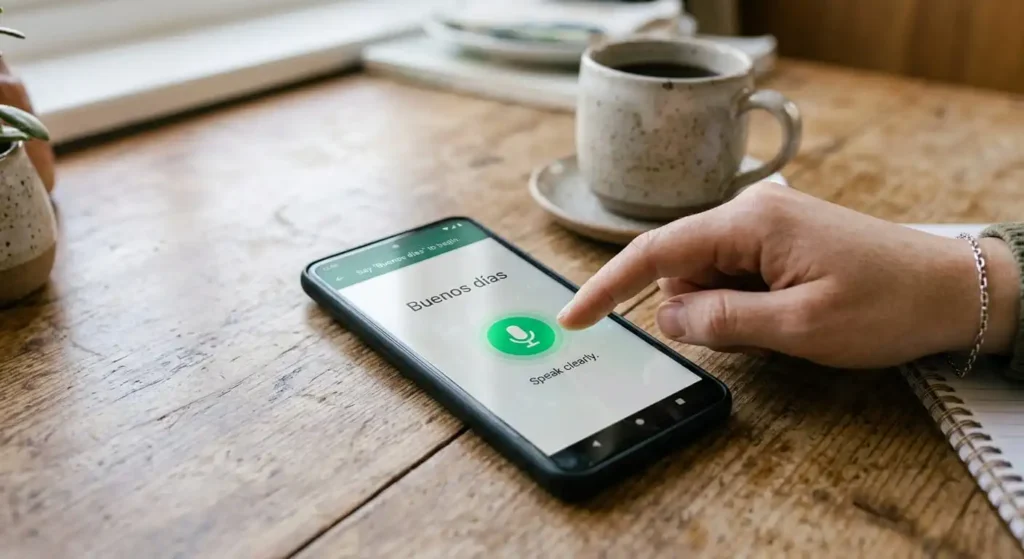
Babbel’s speech recognition predates Babbel Speak and works differently. When a lesson includes a speaking exercise, you tap a microphone icon, say the word or phrase out loud, and the system analyzes how closely your pronunciation matches the target language.
This tool runs on machine learning models trained on native speaker audio, which lets it flag mispronunciations and score your attempt rather than just accepting or rejecting a recording. It is available across the Babbel app and on desktop through Chrome, with broader browser support for a handful of major languages.
3. Adaptive Review and Personalized Practice
The third AI layer is quieter but runs constantly in the background. Babbel’s review sessions are scheduled automatically based on what you have learned and where you are struggling, using spaced repetition to decide when a word or grammar point needs to resurface before you forget it.
Lesson pacing and practice prompts adjust to your speed and retention over time as well. None of this looks like a chatbot, but it is the same underlying idea as AI-powered recommendation systems elsewhere: the app is reading your performance data and adjusting what it shows you next.
4. A Brief History of AI at Babbel
Babbel’s AI features did not arrive all at once. The company introduced AI Enhanced Speech Recognition alongside a feature called Everyday Conversations back in November 2023, well before Babbel Speak existed, aiming that first wave squarely at pronunciation feedback during vocabulary lessons.
Babbel Speak arrived nearly two years later, in September 2025, as a separate, more ambitious step: instead of grading a word or phrase you repeated, it lets you generate full sentences on the fly and get an AI response back. Seen together, the two launches show a clear pattern. Babbel adds AI gradually to solve one specific learning problem at a time, rather than rebuilding the whole app around a model in one move.
That gradual rollout also explains why availability still varies by language. Speech recognition works across more of Babbel’s 14 languages than Babbel Speak does, since the newer, more complex feature launched first in a smaller set of languages and has been expanding from there.
What Babbel Does Not Use AI For
Babbel has been fairly consistent about drawing a line here. Its core lesson content, the actual vocabulary, grammar explanations, and dialogue scripts, is written by a team of over 200 linguists and language experts, not generated by a model.
Every lesson is also voiced by native speakers rather than synthetic text-to-speech audio, which several independent reviewers point to as a deliberate choice to keep pronunciation authentic. Nehal Shah, Babbel’s director of engineering, put the company’s stance plainly: AI is evolving fast, but there is still no replacement for human interaction when it comes to real connection between people learning a language together.
That framing explains why Babbel added AI conversation practice on top of its curriculum instead of replacing the curriculum with it. The structured, teacher-built lessons stayed the foundation, and AI was layered in specifically to solve the one thing static lessons cannot do well: unscripted, real-time speaking practice.
How Babbel Speak Works, Step by Step
Babbel Speak sits in its own tab on the app home screen, separate from the regular course track. Opening it gives you a menu of real-life scenarios, ordering coffee in Paris, greeting a neighbor in German, or making small talk about your interests, each with a clear objective stated up front.
Once you pick a scenario, the AI partner starts the conversation, and you respond out loud. The app gives feedback on your language skills as you go rather than only at the end, and gentle animations along with visual timing cues are built in specifically to reduce the anxiety that comes with speaking on the spot.
Babbel has described the goal as moving learners “from silence to speech,” positioning Babbel Speak as the step between finishing a structured lesson and actually using the language with another person. It is still labeled a beta feature, meaning Babbel has said functionality and availability may change, and it reserves the right to make it a paid feature later.
Babbel’s AI vs Fully AI-First Language Apps
It helps to see where Babbel sits next to apps built around AI from the ground up. Tools like Talkpal or fully AI-driven conversation partners let you talk about almost anything with no fixed script, since a language model is generating the entire exchange in real time.
Babbel Speak works inside a narrower lane by design. The scenario, vocabulary, and learning objective are fixed by Babbel’s language experts, and AI fills in the natural back-and-forth within those boundaries. That tradeoff gives you less freedom to go off-script, but it also means the practice stays level-appropriate and anxiety is easier to manage for a true beginner.

Reviewers who cover both categories describe this as Babbel’s structured, methodical approach carrying over into its speaking feature, in contrast to apps that hand you a fully open microphone from the first session.
Is Babbel’s AI Any Good?
Independent reviews are generally positive but not uncritical. One 2026 review scored Babbel 9.4 overall and praised its guided conversation practice, while separately noting that Babbel places less emphasis on freeform speaking than some newer AI competitors.
Another reviewer who tested Babbel Speak directly called it the company’s first feature built entirely around the moment most learners dread, opening their mouth to speak, and noted that its speech recognition is solid for building confidence but less granular than pronunciation-focused tools such as ELSA Speak. A separate 2026 review of the core app described the speech recognition as decent but not flawless, calling it a confidence builder rather than a strict coach.
The consistent theme across reviews is that Babbel’s AI works best as a bridge. It gets nervous beginners talking sooner than a purely lesson-based app would, without trying to replace the value of a live tutor or real conversation with another person entirely.
Should You Trust Babbel’s AI Features?
If your main worry is whether Babbel swapped out real teachers for a language model, you can relax. The curriculum, the part you actually spend most of your time on, is still human-written and human-voiced, with AI added specifically for the speaking gap that scripted lessons cannot fill on their own.
If your worry is the opposite, that you want more AI, more open-ended conversation, and less fixed structure, Babbel’s approach will feel more limited than apps built entirely around a language model. Babbel Speak is also still labeled beta, so expect occasional rough edges and be aware that Babbel has reserved the right to change its availability or pricing.
Either way, the practical takeaway is the same. Babbel uses AI to support a curriculum built by people, not to replace it, and that balance is the actual answer to whether Babbel uses AI.
There is also a practical microphone question worth answering directly, since Babbel Speak and speech recognition both need audio access to work. Babbel’s own help documentation walks users through granting microphone permission on each device and notes that a stable internet connection and a quiet room both affect how accurately the AI can score your speech. If you would rather not grant microphone access at all, the core lesson track, vocabulary, grammar, listening, and writing still work fully without it, so opting out of the AI speaking tools does not lock you out of the rest of the app.
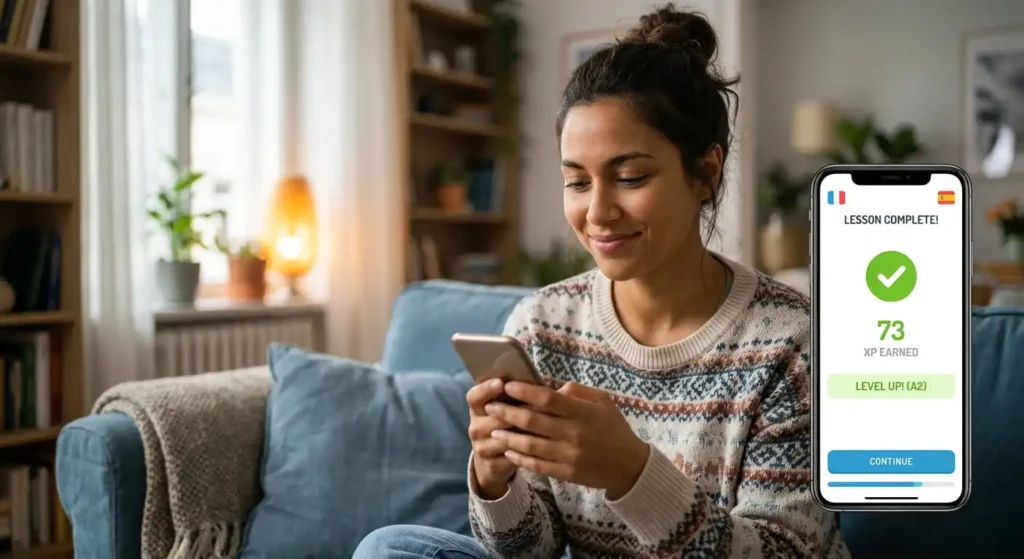
For context on cost before you commit to testing any of this yourself, Babbel’s plans in 2026 run roughly from eight to fifteen dollars a month depending on the length of the commitment, with a short free trial that includes access to Babbel Speak sample lessons.