If you have used Claude for research, coding, or writing, you might wonder who owns claude ai. You might also wonder whether a bigger tech company is quietly running the show. The short answer is Anthropic, a private company built specifically to develop AI carefully. But the fuller answer involves an unusual legal structure. It includes a trust with power over part of the board. It also includes tens of billions of dollars from investors who still cannot vote on how the company is run. This guide walks through the founders, the corporate structure, and the investors. It also covers the practical questions people ask once they understand who actually controls Claude.
Who Makes Claude AI? Meet Anthropic
Anthropic is an AI research and product company headquartered in San Francisco. It designs, trains, and operates the Claude family of models, along with the apps, API, and coding tools built around them. The company was incorporated in 2021. It has grown from a small research team into one of the most valuable private companies in the world.
Anthropic is not a subsidiary of Amazon, Google, or any other company. It is an independent business with its own board, its own leadership team, and its own product roadmap. Anthropic licenses Claude to partners and sells access directly. But ownership of the model, the training methods, and the company itself sits with Anthropic alone.
The Founders Behind Anthropic
Anthropic was founded in 2021 by seven researchers and engineers who left OpenAI together. Dario Amodei had led research at OpenAI and worked on GPT-2 and GPT-3. He became CEO. His sister Daniela Amodei had overseen safety and policy work at OpenAI. She became President.
The rest of the founding team brought deep technical backgrounds. Jared Kaplan had studied how model performance scales with size and data. Tom Brown had been a lead engineer on GPT-3. Sam McCandlish had run research engineering at OpenAI. Chris Olah specialized in interpretability, the study of how neural networks reach their answers. Jack Clark had led policy work at OpenAI. Ben Mann rounded out the group as one of the founding technical leads.
Why the Founders Left OpenAI
The founding team left OpenAI in late 2020 and early 2021. Their departure came amid disagreements about pace and safety practices. It also followed a period when OpenAI was restructuring its relationship with Microsoft. Rather than argue internally, the group started a new company instead, one built around safety research from day one. That decision explains much of how Anthropic is legally structured today.

What Kind of Company Owns Claude?
Claude is owned by a single company, but that company is not a normal for-profit corporation. Anthropic is built on two layers of structure most startups do not use. One is a public benefit corporation charter. The other is a separate trust with board-level power.
Anthropic’s Public Benefit Corporation Structure
Anthropic is incorporated in Delaware as a public benefit corporation, often shortened to PBC. A PBC has a legal duty to weigh a stated public mission alongside profit. It does not have to pursue shareholder returns above everything else. Anthropic’s charter names the safe and responsible development of advanced AI as that mission.
In practice, this gives Anthropic’s board legal cover for certain decisions. The board can prioritize safety research or slower rollout timelines, even when a faster approach might be more profitable in the short term. A standard corporation board that ignored profit for a stated mission could face shareholder pressure. A PBC board is protected as long as it weighs both goals in good faith.
The Long-Term Benefit Trust
The more unusual piece of Anthropic’s structure is the Long-Term Benefit Trust. The Trust holds a special class of shares. Those shares carry the right to elect a portion of Anthropic’s board over time. The people who sit on the Trust do not own equity in Anthropic. They do not profit from its financial performance.
This matters because it separates board control from investment size. A venture investor who writes a multi-billion dollar check normally expects board seats and voting power to match. At Anthropic, the Trust’s board seats exist to represent the company’s long-term mission instead. That limits how much sway even the largest backers can have over research direction and safety decisions.
Who Has Invested in Anthropic?
Anthropic has raised more capital, faster, than almost any private company in history. Total funding sits well over one hundred billion dollars across more than a dozen rounds. The company’s valuation has climbed from roughly four billion dollars in 2023 to close to one trillion dollars in 2026.
The pace of that climb is worth sitting with for a moment. Anthropic was valued at about sixty one billion dollars in March 2025. By September 2025 that figure had roughly tripled to one hundred eighty three billion. It nearly doubled again to three hundred eighty billion in February 2026. Then it more than doubled again, reaching nine hundred sixty five billion dollars in May 2026 on the back of a sixty five billion dollar round. Revenue grew alongside the valuation. Claude Code, Anthropic’s coding tool, drove much of that growth. Within about a year of launch it helped push the company’s annualized run rate past forty billion dollars.
Amazon’s Stake
Amazon is Anthropic’s largest single investor. Its early commitments totaled around eight billion dollars between 2023 and 2024, and in 2026 it added billions more tied to compute partnerships and milestones. Amazon Web Services is also Anthropic’s primary cloud and training infrastructure partner, which ties the two companies together commercially as well as financially. Despite the size of the investment, Amazon’s stake carries no board control.
Google’s Stake
Alphabet, Google’s parent company, has invested a comparable or larger amount. Google’s involvement includes direct funding and access to its Tensor Processing Units for training and running Claude models. It also includes distribution through Google Cloud’s Vertex AI platform. As with Amazon, Google’s investment does not come with a board seat or voting control over Anthropic’s direction.
Other Investors
Beyond the two hyperscalers, Anthropic’s investor base is broad. It includes sovereign wealth funds, large asset managers, and venture firms such as Fidelity, Coatue, Sequoia Capital, and GIC. Many others joined its 2026 funding rounds too. No single investor, including Amazon or Google, is known to hold a majority stake in the company.

Is Anthropic Publicly Traded?
Not yet. Anthropic remains a private company, so there is no ticker symbol you can buy on a stock exchange today. In mid-2026, Anthropic filed a confidential draft registration for an initial public offering. That step typically precedes a public listing by many months. As of this writing, no exchange, ticker, or listing date had been confirmed.
Until Claude AI stock exists in a tradable form, ordinary investors have only indirect exposure. The closest options are Amazon and Alphabet. Both hold large stakes in Anthropic and trade on public markets under their own tickers.
Do Amazon or Google Control Anthropic?
No. Both companies are financial backers and infrastructure partners, not owners in the governance sense. Their investment agreements include independence covenants. Those covenants keep voting power and board influence limited, regardless of how much capital either company contributes. Anthropic’s day-to-day decisions, including safety policies and product direction, are made by its own leadership and board. The Long-Term Benefit Trust holds seats insulated from any single investor’s interests.
This is a deliberate design choice, not an accident of negotiation. Anthropic’s leadership has spoken publicly about wanting to avoid one specific risk: a single tech company pressuring Claude’s development to favor that company’s other products.
Who Owns What You Create With Claude
Anthropic owns the Claude models themselves. That includes the underlying weights, the training methods, and the Claude name. It is a separate question from who owns the content a person creates while using Claude.
Under Anthropic’s consumer and commercial terms, users generally retain ownership of what they submit and what Claude generates for them. This is subject to the usage policies in place at the time. Anthropic does not claim ownership over a user’s essay, code, or business document just because Claude helped produce it. Data handling and training-use policies change over time. Anyone working with sensitive material should check Anthropic’s current terms and privacy policy directly, rather than a summary written elsewhere.
How Claude’s Ownership Compares With Other AI Chatbots
Claude’s ownership model looks different from most of its direct competitors. ChatGPT is built by OpenAI, whose for-profit arm operates under Microsoft’s significant financial backing and close product integration. Google’s Gemini is developed and owned directly inside Alphabet, with no external investor layer at all. Meta’s AI tools sit inside Meta Platforms, a public company. A single founder holds concentrated voting control there through a dual-class share structure.
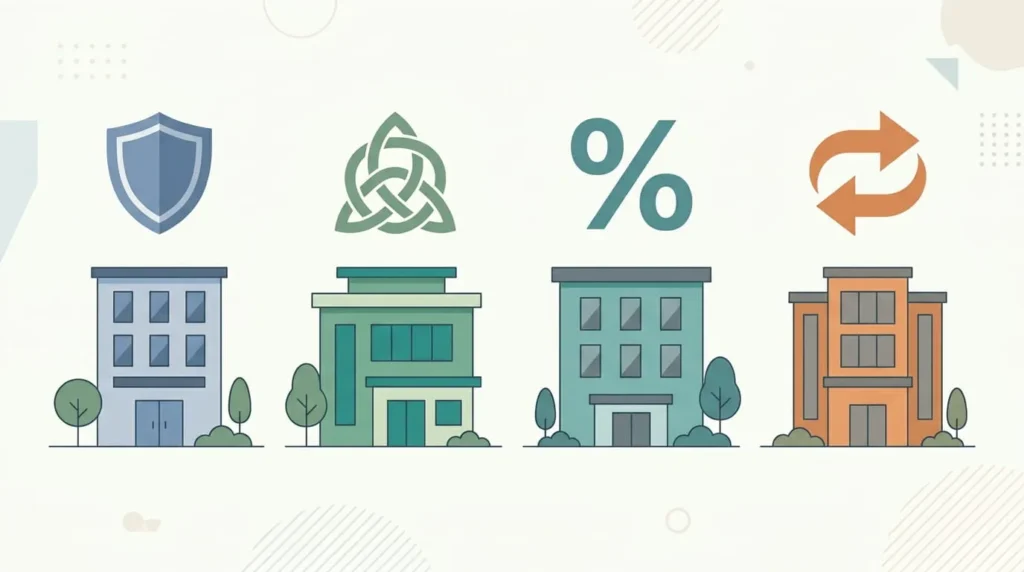
Anthropic’s combination of PBC status and an independent trust is not something any of those competitors use in the same form. That does not automatically make Claude safer or better. But it does mean Anthropic’s investors have less formal leverage over its decisions than is typical among its closest rivals.