
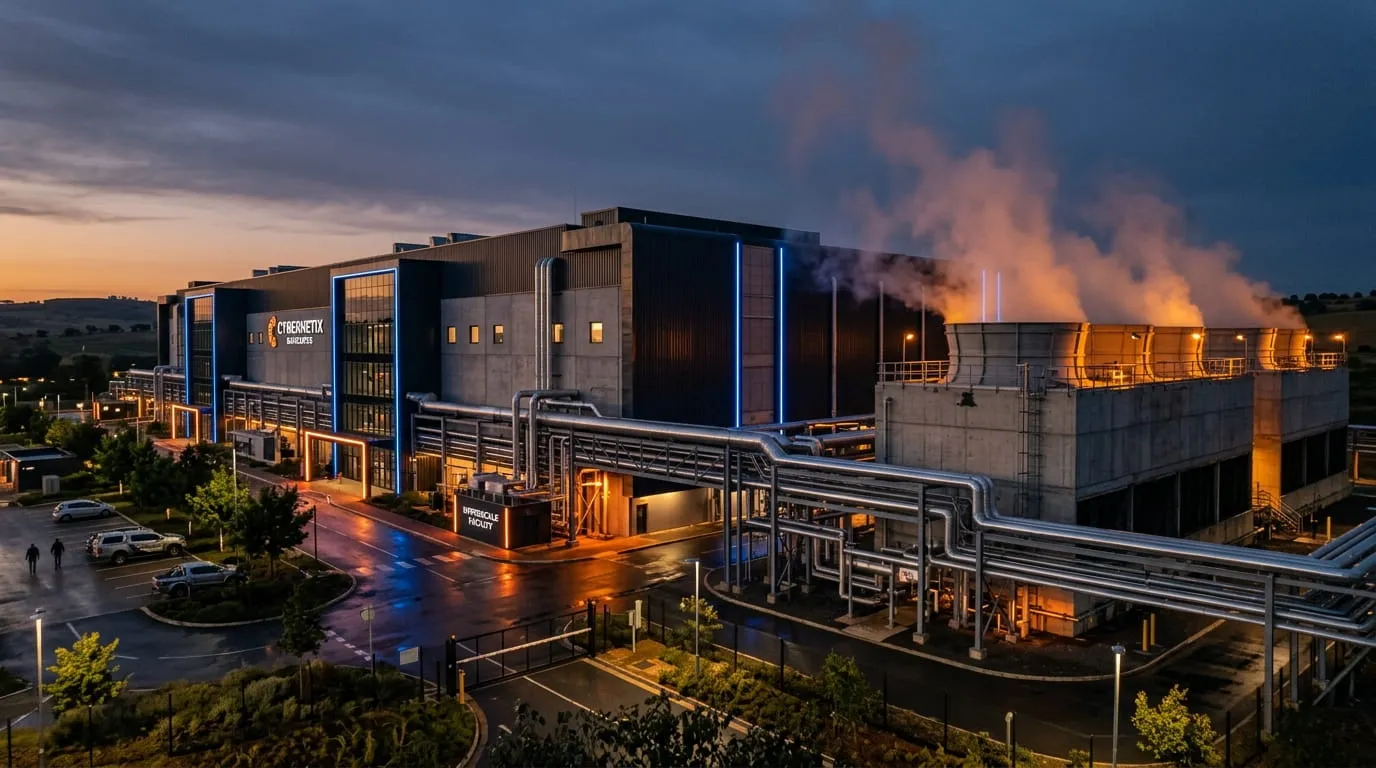
Every time a chatbot answers a question, a physical machine somewhere gets warmer. That heat has to go somewhere, and in most data centers, water is the tool that carries it away. AI uses water mainly for two reasons: cooling the servers that run AI models, and generating the electricity those servers depend on. A smaller amount also goes into manufacturing the chips themselves.
The numbers you see online range wildly, from a few drops per question to half a bottle of water per email. That spread is not because anyone is lying. It happens because different reports measure different things, in different places, using different assumptions. Understanding why AI needs water at all makes those numbers much easier to interpret.
The Basic Reason AI Needs Water: Heat
AI models run on racks of specialized processors called GPUs, and those chips generate an enormous amount of heat when they work. A single AI training rack can throw off 40 to 120 kilowatts of heat, compared to 5 to 15 kilowatts for a typical server rack from a decade ago. That heat has to be removed constantly, or the hardware fails.
Water is one of the most efficient substances available for pulling heat out of a building at scale. It absorbs far more heat per gallon than air does, which is why data centers have leaned on water-based cooling for years, long before AI became the dominant workload.
How Evaporative Cooling Actually Works
Most large data centers use a method called evaporative cooling. Water is circulated through cooling towers, where some of it evaporates into the air. That evaporation pulls heat out of the system, similar to how sweat cools your skin. It is effective and relatively cheap, but the water that evaporates does not return to the local supply. It is genuinely consumed, not just borrowed.
Roughly 70 to 85 percent of the water withdrawn for this kind of cooling ends up consumed this way rather than returned to a river or reservoir. That is the core reason data center water use shows up on local water balance sheets rather than disappearing into a closed loop.
The Hidden Cost: Water Behind the Electricity
Cooling towers get most of the attention, but they are often not the biggest piece of the puzzle. Generating electricity, especially from thermoelectric power plants that burn fuel to make steam, also consumes water. On average, producing one kilowatt-hour of electricity consumes roughly two gallons of freshwater somewhere in the supply chain.
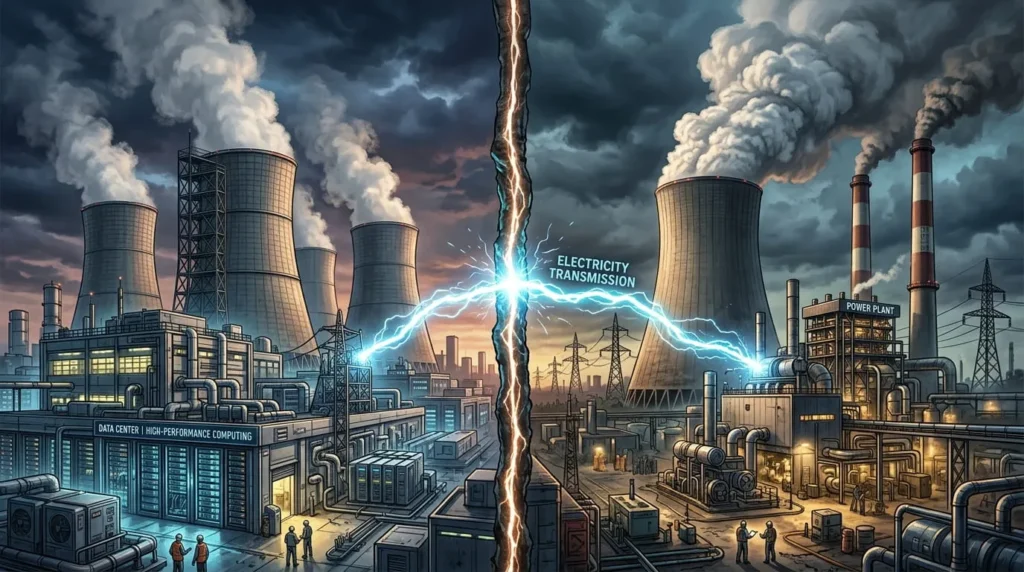
Lawrence Berkeley National Laboratory has found that indirect water use, tied to electricity generation, can outweigh direct on-site cooling water by a wide margin at the national level. In other words, an AI data center running on power from a water-intensive grid can have a larger water footprint from its electricity bill than from its own cooling towers.
How Much Water Does One AI Prompt Use?
This is where the viral numbers come from, and it is also where the most disagreement exists. Early estimates suggested a single ChatGPT-style conversation could use up to half a liter of water. More recent, efficiency-adjusted figures put a typical short text prompt at well under one milliliter of direct water use, sometimes as low as a quarter of a milliliter under modern cooling setups.
Google has stated that a typical query uses about five drops of water. OpenAI’s Sam Altman has cited a similar figure, roughly one-fifteenth of a teaspoon. Longer, more complex prompts to larger models can push that number higher, with some analyses estimating over 100 milliliters for demanding queries on frontier-scale models. The honest answer is that per-prompt water use depends heavily on the model size, the length of the response, the cooling system in use, and where the data center is located.
Training an AI Model Uses Far More Water Than Running One
Building a large AI model from scratch is a different story than answering everyday questions. Training a model on the scale of GPT-4 has been estimated to consume around 700,000 liters, close to 185,000 gallons, of water for cooling during the training process alone. That water gets used over weeks or months, as thousands of GPUs run at full capacity nonstop while the model learns from its training data.
That water cost is spread across every future query the model ever answers, which is part of why per-prompt estimates keep shrinking as models get reused more widely. A model trained once can answer billions of questions afterward, so the training footprint gets divided across a massive number of uses. This is also why newer, more efficient training methods matter so much. Shortening training time or reducing the number of GPU-hours needed cuts water use just as directly as improving the cooling system itself.
The Bigger Picture: Total Water Use by AI Data Centers
Individual prompts are small, but the aggregate is not. U.S. data centers directly consumed an estimated 17 to 17.5 billion gallons of water in 2023, according to Lawrence Berkeley National Laboratory. That figure could double or even quadruple by 2028 as AI-driven demand grows, pushing direct consumption toward 38 to 73 billion gallons a year.
Globally, the International Energy Agency estimated data centers consumed around 560 billion liters of water in 2023, with projections near 1,200 billion liters by 2030. Some research groups, including teams at UC Riverside, project AI infrastructure specifically could consume 1.1 to 1.7 trillion gallons of freshwater globally per year by 2030 if growth continues on its current path.
Why the Numbers Disagree So Much
If you have seen wildly different figures for AI’s water use, both are probably measuring real things, just not the same thing. Some estimates only count water evaporated on-site at the data center. Others add in the water used to generate electricity. A smaller number of reports also include the water used to manufacture the chips themselves, which requires ultra-pure water in large quantities.
Location matters enormously too. A data center cooled with air in a cold, wet climate can use very little water directly, while shifting that cost to higher electricity use instead. A data center using evaporative cooling in a hot, dry climate can consume far more water per unit of computing power. Researchers have found water use can differ by hundreds of times between facilities depending on climate, cooling technology, and the local electricity mix.
Where the Strain Actually Shows Up
Nationally, AI’s water footprint is a small slice of total water use. Agriculture alone requires far more water than every data center in the country combined, with U.S. crop irrigation running into the trillions of gallons annually. But national averages hide local realities.
About two-thirds of data centers built since 2022 sit in areas already facing water stress. In some towns, a single large facility competes directly with residents and farmers for the same limited water supply, and local water bills or rationing measures have followed in a handful of cases. This local concentration, rather than the national total, is usually what triggers community pushback and local policy debates.
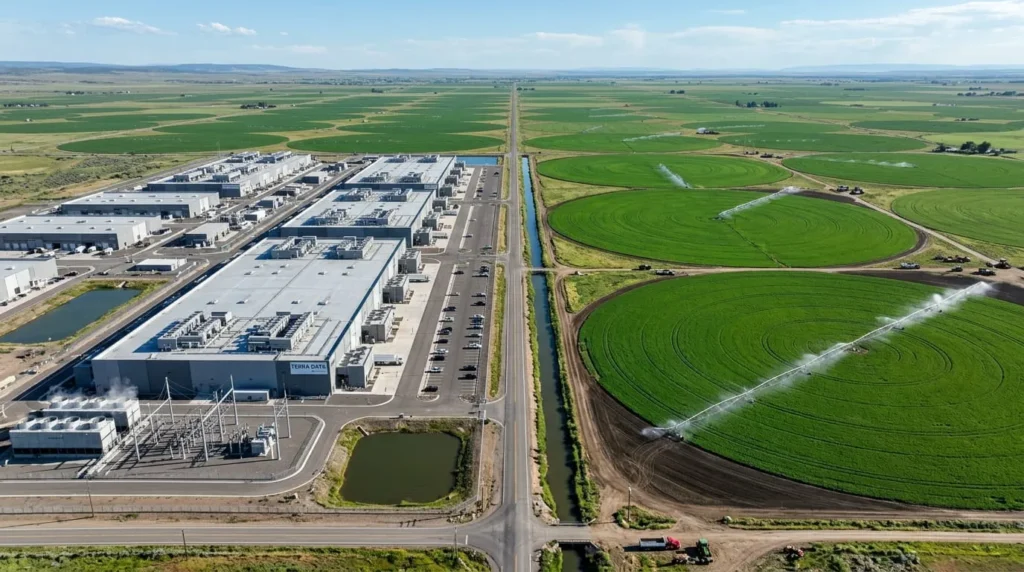
There is also a peak demand problem that national averages hide completely. Evaporative cooling systems work hardest on the hottest days, exactly when local water supplies are already under the most pressure from lawns, pools, and irrigation. Research from UC Riverside and Caltech has found that peak daily water demand from data center cooling can run six to thirty times higher than the annual average. A water utility sizing pipes and treatment capacity for a new facility has to plan around that peak, not the yearly total, which is part of why some municipalities are now asking data center developers to disclose peak-day water needs before approving new projects.
What Tech Companies Are Doing About It
Water use has become a real cost and reputational issue, so major AI companies are actively working to reduce it. Several strategies are already in wide use.
Liquid cooling systems circulate coolant directly to chips in closed loops, cutting the need for evaporative water loss almost entirely. Air-based and dry cooling designs eliminate on-site water use but require more electricity to compensate, so they only help if the electricity comes from a cleaner, less water-intensive grid. Some operators now use reclaimed wastewater or seawater instead of drinking-quality freshwater for cooling towers. A few companies have pledged to become water positive, meaning they aim to replenish more water than their facilities consume, mainly through local watershed restoration projects.
None of these fixes are universal yet. Liquid cooling works well for new builds but is expensive to retrofit into older facilities. Dry cooling helps arid regions but raises energy demand elsewhere. Progress is real, but uneven across the industry.
Should You Be Worried About AI’s Water Use?
The honest answer depends on where you live and what you compare it to. If you are asking whether typing a question into a chatbot personally drains a meaningful amount of water, the answer is no. A single prompt uses a fraction of a milliliter to a few milliliters in most cases, far less than a sip of water.

If you are asking whether AI infrastructure, at scale, is straining local water systems in specific regions, the answer is sometimes yes. Communities near large, evaporative-cooled data centers in dry climates have genuine reasons for concern, and local water planning has not always kept pace with data center growth. The environmental question with AI is less about your personal usage and more about where facilities get built, what cooling technology they use, and how transparent companies are about the tradeoffs.