

If you have searched “hatsune miku ai,” you are probably trying to sort out two different questions at once. Is Hatsune Miku herself an artificial intelligence? And what does the “AI” label mean in Hatsune Miku V6, the vocal software that Crypton Future Media released on April 14, 2026? The short answer is that Miku is not a sentient AI character. She is a virtual singer whose voice is generated by software, and that software now uses AI-based vocal synthesis instead of the older Vocaloid method. This guide breaks down exactly what changed, how the technology works, and where you will actually hear the difference.
What Hatsune Miku Actually Is
Hatsune Miku is a character and a piece of vocal synthesis software published by the Japanese company Crypton Future Media, based in Sapporo. She debuted in 2007 as a voicebank built on Yamaha’s original VOCALOID engine, and she quickly became more than a music tool. Producers used her voice to release original songs, fans illustrated and animated her, and the whole thing snowballed into a global “Vocaloid culture” built almost entirely on user-generated content. Miku now performs at sold-out holographic concerts, has appeared in video game crossovers, and has become one of the most recognizable virtual idols on the planet.
The character design (teal twin-tails, a futuristic outfit, no fixed backstory) was intentionally left open so that fans and producers could shape her identity through the songs and art they made with her. That is the part people often miss: Miku is not a fixed personality written by one studio. She is a shared creative platform.
Is Miku AI? Answering the Real Question
No, Hatsune Miku is not an artificial intelligence in the sense of a chatbot or an autonomous system that thinks or responds. She does not hold conversations, form opinions, or generate her own songs. Every song “by” Miku is written and produced by a human, who types in lyrics and a melody, and the software converts that input into a sung vocal track.
What has changed is the technology behind that conversion. The original Vocaloid engine stitched together small recorded voice samples to build a sung phrase, which is why early Miku vocals sometimes sounded mechanical or oddly phrased. Hatsune Miku V6 replaces that method with an AI-driven engine called VOCALOID:AI, which is why the “AI” label now attaches directly to her name in search results and product pages.
The Character vs the Software
It helps to separate two layers. The character is the teal-haired idol you see in concerts, games, and fan art. The software is the tool producers use to make her sing. When people ask “is Miku AI,” they are usually really asking about the software layer, since that is where the actual AI technology lives. The character herself is not going anywhere; she is simply getting a new voice engine underneath her.
Hatsune Miku V6: The New AI Vocal Engine Explained
Hatsune Miku V6 launched on April 14, 2026, marking the character’s biggest technical update in years. The software uses a new engine called VOCALOID:AI, which is a clear break from the sample-stitching approach of earlier Vocaloid versions. This engine learns from pitch, volume, timing, and accent data to produce a vocal with more human-like warmth and natural variation, rather than assembling recognizable audio chunks.
Crypton rebuilt the voice library from Miku’s original recordings and optimized it for the new engine, so the AI model is trained specifically on her established sound instead of a generic synthetic voice. That is an important distinction for longtime fans: V6 is not a replacement character with a new voice actor, it is the same original vocal source reprocessed through smarter software.

Multilingual Singing in Japanese, English, and Chinese
One of the headline features of V6 is trilingual support for Japanese, English, and Chinese, aimed at natural vocal expression across languages. When a producer enters English lyrics, the system automatically switches into English vocal mode, which allows a single track to mix multiple languages seamlessly. Chinese support is arriving through a free update later in 2026 rather than at launch.
This matters because previous Vocaloid versions of Miku needed separate voicebanks for different languages, and switching between them mid-song was clunky. An AI model that can shift language on the fly, based on the lyrics you type, is a meaningfully different workflow for producers who write bilingual or trilingual tracks.
How AI Vocal Synthesis Works, In Plain Terms
You do not need a technical background to understand the core idea. Older Vocaloid software worked like a very advanced sample library: it had thousands of tiny recorded syllables from Miku’s voice actor, and it glued them together to match the notes and lyrics you entered. That approach could sound impressive, but transitions between syllables sometimes gave away the seams.
An AI vocal engine like VOCALOID:AI instead learns patterns from the recordings, such as how Miku’s pitch rises and falls naturally, how loud she gets during emotional lines, and how she times her breaths. The engine adds natural breaths automatically and can handle multiple languages within a single phrase, generating new vocal audio based on those learned patterns rather than only rearranging pre-recorded clips. The result is closer to how a real singer adjusts their delivery line by line, which is why V6 demos sound noticeably smoother than earlier releases.
Where You Encounter Miku’s AI Voice Today
You do not need to buy the software to hear the results. Producers release finished V6 tracks on platforms like YouTube and niconico, and those songs circulate the same way Miku music always has, through fan reposts, remixes, and concert setlists. If you have watched a recent Miku concert stream or heard a 2026 fan-made track with unusually fluid English lyrics, there is a good chance you were listening to the V6 engine.
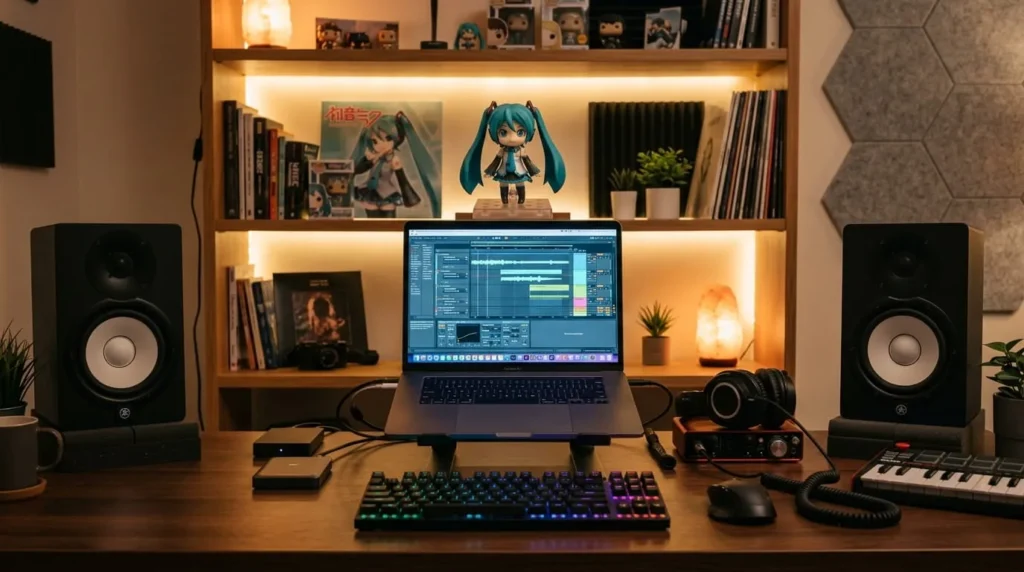
The AI upgrade also affects live shows indirectly. Smoother, more natural vocal output makes it easier for concert producers to build setlists that mix languages or introduce new songs without the vocal quality dipping compared to older tracks.
What This Means If You Want to Try It
If you are a music producer curious about working with Miku’s new AI voice, the entry point is the V6 software itself rather than any kind of chatbot or app. Crypton officially released both digital and physical versions of Hatsune Miku V6 on April 14, 2026, and it runs as a plugin or standalone editor inside standard music production setups.
Pricing and Editions
The software comes in two editions: a Starter Pack priced at $160 that bundles the VOCALOID6 Editor, and a Voice Bank edition priced at $70 for people who already own a compatible editor. Both packages include Steinberg’s Cubase LE digital audio workstation along with virtual instruments and sound content, so a new producer has everything needed to start making music without buying additional software separately. Owners of previous Miku voicebanks, including VOCALOID2, V3, V4X, V4 English, or V4 Chinese, qualify for a discounted upgrade price.
Common Questions About Hatsune Miku and AI
Does Miku talk or respond like a chatbot? No. She only sings the lyrics and melody a human producer enters into the software. There is no conversational AI attached to the character.
Is the AI writing the songs? No. Producers write the lyrics, melody, and arrangement themselves. The AI engine only generates how Miku’s voice sounds when singing what a human already composed.
Will old Miku songs sound different now? Existing releases made with earlier Vocaloid versions are unaffected. Producers have to specifically create or update a track using the V6 voicebank for the AI vocal style to apply.
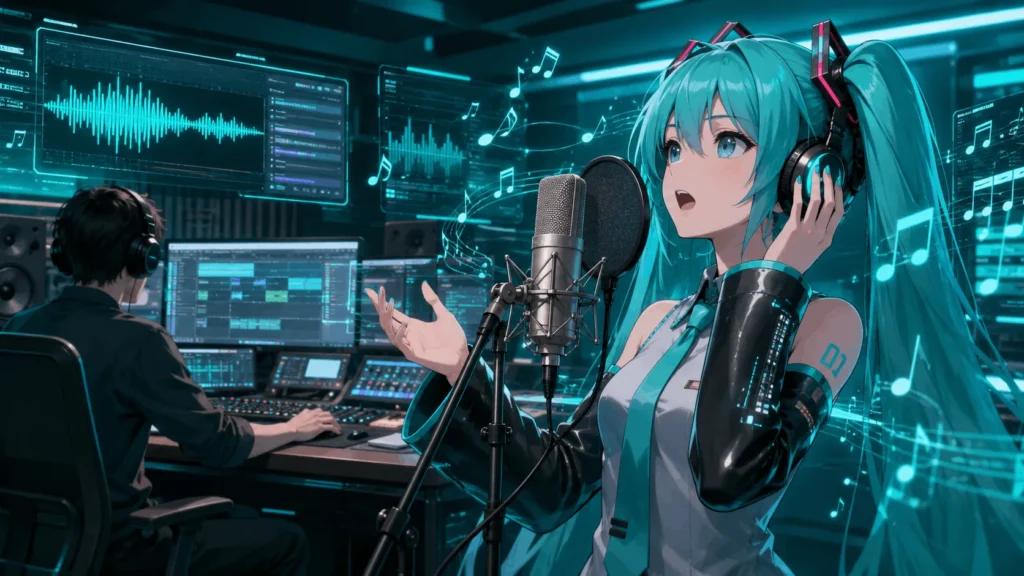
Is V6 the same voice actor as before? Yes, the underlying recordings come from Miku’s original voice source, reprocessed through the new AI engine rather than replaced with a new performer.
Hatsune Miku’s move to AI vocal synthesis is a software upgrade, not a shift toward an autonomous digital being. The character stays the same collaborative platform she has always been. What changes is how natural and flexible her singing voice can be, which opens the door to more expressive, multilingual music from the producers who create with her.