

If you have typed “what are the best AI visibility products” into a search bar recently, you already sense the problem these tools solve. Google’s results page no longer tells the whole story. A growing share of buyers now ask ChatGPT, Perplexity, Gemini, or Google’s AI Mode for a recommendation before they ever click a blue link, and if your brand does not show up in that answer, you lose the sale without knowing it happened.
AI visibility products exist to close that blind spot. They run real prompts through the major AI models, record what those models say about your brand and your competitors, and turn the results into something a marketing team can act on. The category is young, the naming is inconsistent (some vendors call it GEO, others call it AI search optimization or answer engine optimization), and the feature sets vary widely depending on who the tool was built for.
What AI Visibility Products Actually Do
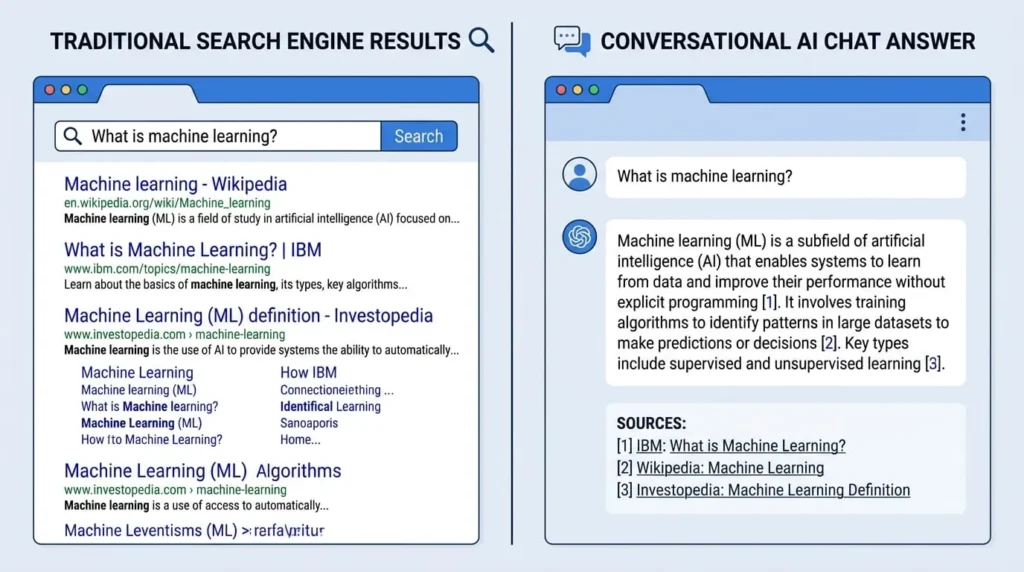
At the core, every AI visibility product performs the same basic job. It sends a defined list of prompts, the questions your customers would realistically ask, into one or more AI models on a repeating schedule. It then parses the responses to check three things: whether your brand appears, where it appears relative to competitors, and which sources the AI model cited to back up what it said.
The output usually looks like a share of voice score, a citation frequency chart, and a log of the raw AI responses so you can see the exact wording used about your brand. Better tools go further. They flag when an AI model states something inaccurate about your pricing or features, and they connect the visibility data to concrete next steps, such as which page to update or which third-party site you need a mention from.
Where these products differ is depth and direction. Some stop at monitoring and hand you a dashboard. Others treat monitoring as the starting point and build workflows for fixing what the dashboard reveals, which matters more than the sign-up price once you have used the tool for a full quarter.
Who Actually Needs One of These Tools
Not every business needs an AI visibility product on day one, but three groups benefit almost immediately.
Content and SEO teams that already invest in organic search need a way to prove that investment still pays off as click volume shifts toward AI answers. Without tracking, you have no evidence of what is happening inside that shift.
E-commerce brands have a sharper version of the same problem. A shopper asking an AI model for “the best running shoes under $100” either gets your product listed or does not, and that outcome depends on product schema, catalog structure, and crawler access as much as on brand reputation.
Agencies managing several client accounts need repeatable reporting they can hand to a client without rebuilding the process from scratch every month.
If none of those describe your situation yet, you can probably wait. If any of them do, the cost of staying blind to AI answers grows every month you delay.
Key Features Worth Paying For
1: Multi-Model Prompt Tracking
A tool that only checks ChatGPT is measuring a fraction of the picture. Buyers spread their questions across ChatGPT, Perplexity, Gemini, Google AI Overviews, and increasingly Copilot. The strongest products track all of these on the same schedule so you can compare how each model treats your brand differently, because they often do.
2: Citation and Source Analysis
Knowing that you were mentioned is only half the answer. You also need to know which page, article, or directory the AI model pulled that mention from. This tells you where to invest in digital PR and content updates, since AI models tend to reuse the same trusted sources repeatedly.
3: Competitive Benchmarking
A visibility score means little in isolation. Seeing that a competitor appears in 40 percent more answers than you do, and for which specific prompts, turns a vague number into a prioritized to-do list.
4: Accuracy and Hallucination Checks
AI models sometimes describe a brand’s pricing, features, or availability incorrectly. A wrong answer can cost you more than no answer at all, and only a handful of tools currently check for this rather than simply counting mentions.
5: A Path From Insight to Action
The best products do not stop at reporting. They suggest which pages to update, which structured data is missing, or which external sources to pursue for a mention, so the data leads somewhere instead of sitting in a dashboard nobody opens after the first week.
How the Best AI Visibility Products Compare by Use Case
There is no single best tool because “best” depends entirely on what you are trying to solve. Grouping the market by use case gives a clearer picture than a flat ranked list.
1: For Enterprise-Wide Brand Monitoring
Larger organizations tracking dozens of prompts across regions and languages usually need a platform built for scale, with multi-seat access, compliance certifications, and dedicated account support. These platforms tend to carry custom enterprise pricing rather than a self-serve checkout, which fits companies with a defined AI search budget and a team to act on the findings.
2: For Teams Already Inside an SEO Suite
If your organization already runs its keyword tracking, backlink analysis, and site audits through an established SEO platform, adding AI visibility as a module inside that same suite avoids fragmenting your reporting across separate tools. You lose some specialization in exchange for having brand mentions, organic rankings, and AI citations in one place your team already checks daily.
3: For Content Teams Focused on Closing Gaps
Some products are built specifically to connect visibility monitoring with the content workflow, so when a gap appears you can draft the fix in the same platform rather than exporting a spreadsheet to your writers. This suits lean content teams who need speed more than enterprise-grade reporting.
4:For E-commerce and Product Catalogs
Generic brand monitoring tools often miss the real problem in retail, which sits lower in the stack. Missing product schema, blocked crawlers, or inconsistent catalog data stop an AI model from recommending a product before ranking logic even applies. Tools built specifically for commerce check catalog readiness first, then layer prompt tracking and traffic attribution on top.
5: For Smaller Budgets
Not every team needs enterprise depth on day one. Lighter, lower-cost tools that track a limited set of prompts across the major models let a small business or solo marketer establish a baseline before committing to a larger platform.

How to Choose the Right Product for Your Situation
Start with the prompts, not the tool. Write down the ten to twenty questions your actual buyers ask before they decide, and check whether the vendor’s demo can run your exact prompts rather than a generic set. A tool that scores well on someone else’s category may say very little about yours.
Next, weigh model coverage against your audience. If your customers primarily use ChatGPT and Google, deep Perplexity coverage matters less than a vendor’s marketing page suggests. Match the tool to where your buyers actually ask, not to the longest logo list on the pricing page.
Finally, test the export and action layer before you buy. Ask to see what happens after the tool tells you something is wrong. If the answer is “you update your content manually based on the dashboard,” decide whether that manual step fits your team’s bandwidth, because that gap is where many subscriptions quietly stop getting used after the first month.
Common Mistakes When Evaluating AI Visibility Products
Judging a tool purely by its overall visibility score is the most frequent mistake. Two brands can have the same score for very different reasons, one from broad brand recognition and one from a single lucky citation, and only the prompt-level detail tells you which.
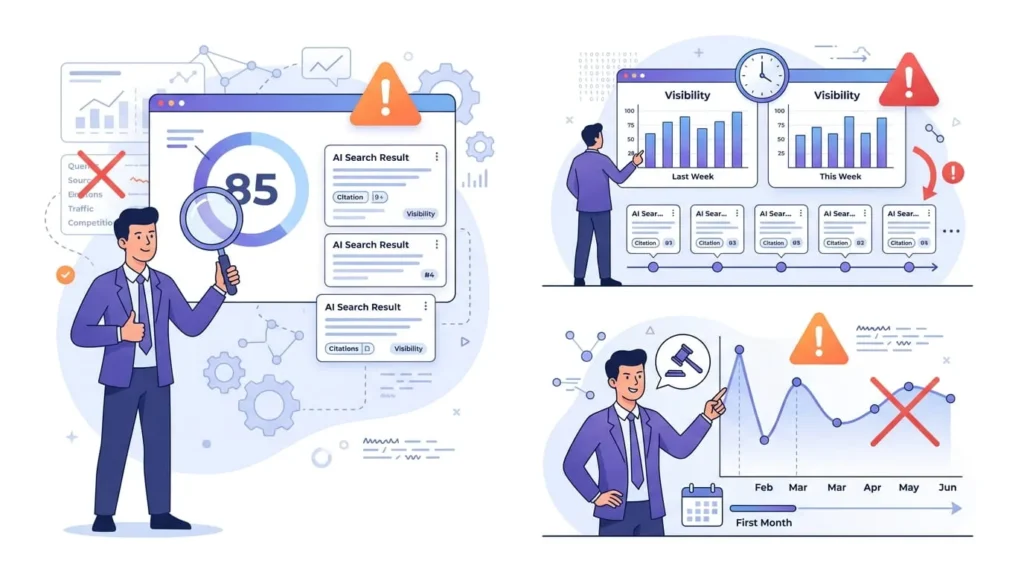
Ignoring update frequency is another. AI model answers change as the underlying models get retrained and as new content gets indexed, so a tool that checks weekly will miss shifts a daily tracker catches within hours.
Treating the first month of data as a verdict is a third mistake. Visibility scores move as your content and citations catch up to any changes you make, so give a tool at least one full content cycle before deciding it does not work for your brand.